Bill of quantities (BOQ) in construction
A bill of quantities (BOQ or BQ) is an itemized list of the materials, labor and services a construction project needs, with a measured quantity and unit for every item. Bidders fill in their rates against the same list, so the owner gets offers that can be compared line by line. Once the contract is signed, the priced list becomes the basis for progress payments and for valuing changes.
- Topic
- Cost estimates
- Updated
- Reading time
- 11 min
- Studio
- Morales Arch & Design
In this article
- What is a bill of quantities in construction?
- Who prepares a BOQ, and which measurement rules apply
- What a bill of quantities contains, with an example
- Types of bill of quantities
- How to prepare a bill of quantities
- How contractors price a BOQ
- Using the BOQ in bidding: benefits and checks
- After award: payments, variations and the schedule
- Bill of quantities vs bill of materials
- Bill of quantities FAQ
What is a bill of quantities in construction?
A BOQ breaks a building down into measurable items and states how much of each one is required. Depending on the item, the quantity may be a count, an area, a volume, a weight or a length of time. Concrete is measured in cubic yards, paint in gallons, a painter in hours.
It is usually compiled before a contractor is hired and guides everyone who bids. A thorough bill covers materials, parts and labor with their costs, and ideally the contract terms as well. Most are written for larger or complex projects, where an owner would otherwise struggle to set one proposal against another.
The document started out much more modestly. Early bills were measurements taken off the drawings to help tenderers quote a lump sum, and they had no contractual force. They also gave rise to a profession: quantity surveying became a separate occupation in Britain in the 19th century. Today a BOQ has two jobs. It lets bidders price accurately, and once priced it serves as the yardstick for valuing completed work at regular intervals.
Who prepares a BOQ, and which measurement rules apply
In the United States the owner normally asks the architect or engineer to do the takeoff and draw up the bill after the project is approved and the design is complete. In the UK, across the Commonwealth and in the Gulf, the work belongs to a quantity surveyor (QS) or building estimator. Either way, a full bill needs finished drawings and a prepared specification.
A QS engaged by the owner from the start does far more than measure. The role covers cost feasibility, the budget, a cost check at each design stage, the final BOQ, advice on contract arrangements, and the certificates for interim and final payments. Owners without a QS can buy parts of this separately through construction estimating services.
Practice differs by region:
- USA. Takeoffs are organized on a standard breakdown, often CSI MasterFormat, and the schedule of values carries the payment side.
- UK. The RICS New Rules of Measurement apply. NRM 1 deals with order of cost estimating and cost planning for capital works, NRM 2 with detailed measurement for building works, NRM 3 with maintenance works.
- Commonwealth and Gulf. BOQs prepared by a QS under standard measurement rules are the norm.
- International contracts. World Bank and FIDIC documents include a bill of quantities, and in many countries it forms part of the contract.
NRM 2 is the UK standard for detailed measurement. It was reissued in October 2022 as practice information, with content unchanged from October 2021. The 2012 first edition is out of date for new projects.
What a bill of quantities contains, with an example
The skeleton is a work breakdown structure. Under each heading sit numbered lines, and every line gives the item type (material or labor), a description, the unit of measure, the quantity, the rate and the line total. Quantity times rate produces the total; the totals added together produce the price.
| Item | Description | Unit | Quantity | Rate | Total |
|---|---|---|---|---|---|
| Concrete | Reinforced concrete in grade beams | cu yd | 1,000 | $75 | $75,000 |
| Painting, material | Paint for the exterior | gallon | as measured | about $5 | quantity × rate |
| Painting, labor | Painter, exterior walls | hour | as estimated | about $25 | quantity × rate |
Descriptions need context. "Paint" leaves a bidder guessing, while "paint for the exterior" can be priced. Similar work also has to be split when location or conditions change what it costs, since one line and one rate cannot represent both cases.
The same layout scales down. A bill for a backyard dog house would list wood, nails and paint, then the labor to cut, frame, side and paint. If you only need a simpler budget sheet, start from a building cost estimate template.
Types of bill of quantities
The right format depends on how far the design has progressed and on what the reader wants to compare.
| Type | How it is organized | When it is used |
|---|---|---|
| Preliminary or approximate (notional) | Estimated quantities, revised once the work is measured | Early budgeting, feasibility, or pricing before the design is complete |
| Detailed | Full measurements and specifications for every item | Tendering and contracts |
| Elemental | Grouped by building element | Comparing costs across sections of the building |
| Trade | Split into electrical, plumbing, carpentry, masonry and other trades | Work priced trade by trade |
| Provisional | Placeholders for items whose quantities are not fully defined | Scope that still has open questions |
Contingency sum
A contingency sum is a BOQ item that covers unforeseeable cost, and it comes in two kinds. Type 1 is tied to a specific item that can already be foreseen, such as extra alterations to services around a shower. Type 2 is not tied to anything in advance: it can be put toward any item or toward extra work requested by the contract administrator. The client's QS usually estimates type 1, and the contractor's QS or commercial manager estimates type 2.
How to prepare a bill of quantities
- Confirm the design is ready. Collect the complete drawings and the specification. If they are unfinished, label the bill approximate.
- Break the work into measurable items. CSI MasterFormat is a common framework in the US. Grouping items by subcontractor package makes bidding easier for general contractors.
- Take off the quantities. Measure each item from the drawings and record it in the unit that fits. Quantity takeoff services cover this step when nobody on the team can do it.
- Write the descriptions. State what the item is, where it goes and under what conditions it will be done.
- Set up the pricing columns. Rates can be left blank for bidders or filled in by the QS as a reference.
- Roll up to a summary page. Section totals carry to one sheet that shows the full bid.
- Check against the drawings. Anything drawn but missing from the list has to be reported, and a revised BOQ may be issued.
BIM software now generates many of these quantity lists and updates them when the model changes. Spreadsheets remain common too. NRM 2 comes with Excel appendices B to F, and RICS templates can be customized, although users must check the formulas themselves.
How contractors price a BOQ
An item rate is made of materials, equipment, labor, overheads and profit. Where the QS has shown rates, a contractor may quote a percentage above or below them. Where the column is blank, the contractor enters each rate.
Material cost comes from supplier quotations plus wastage factors and delivery. Labor is the hardest part to price. Published hourly rates are only a starting point, because sickness, weather, overtime and real productivity all change the cost of an hour of finished work.
The allowance for overhead and profit can run from about 2.5% to more than 25%, depending on the quality of the documents and the state of the market. Buying matters after award as well: a supplier discount of around 2% obtained once the job is won changes the contractor's profit.
The same build-up stands behind any building construction estimate. The difference with a BOQ is that the quantities are fixed and shared, so bidders compete on rates.
Using the BOQ in bidding: benefits and checks
In design-bid-build the BOQ goes into the bid package and contractors price it. Several firms are spared measuring the same design, arithmetic slips become rarer, and fixed quantities leave little room for misreading the scope. The owner does not have to level bids by hand and can see which offers are competitive. Bidders get a clearer view of their margin. Listing the materials and labor also defines the scope, since the tasks follow from the list.
Careful contractors often run their own takeoff anyway to find gaps the design team missed. If their figures disagree with the bill, they raise it through a request for information (RFI).
Before pricing or accepting a bill, check these points:
- every item on the drawings appears in the list;
- each description says where the item goes and what it includes;
- units suit the work, and line totals equal quantity times rate;
- work in different locations or conditions is listed separately where the cost differs;
- provisional items and approximate quantities are marked as such, with a route to remeasurement;
- contingency sums say whether they cover one named event or anything at all;
- the section totals match the summary page.
Whether the BOQ is a contract document depends on the country and the form of contract. Read the agreement before relying on its quantities.
After award: payments, variations and the schedule
The priced bill can become the schedule of values for progress invoicing. Each month's payment application multiplies the quantity completed by the item price. The owner can therefore predict cost and plan cash flow for each billing cycle, and both sides have an open basis for financial administration.
It also works as a data bank for changes. Suppose an item carries a rate of $110 per unit, built on $60 of material and a 10% overhead. If the specification changes and the material goes to $80, the extra $20 plus 10% adds $22, and the new rate is $132.
A works schedule can be derived from the labor figures. With $240,000 of labor priced at $240 an hour, there are 1,000 hours of work. At 40 hours a week that takes 25 weeks, which lets the team check the schedule against the price.
Bill of quantities vs bill of materials
A bill of materials (BOM) is a procurement list. It names raw materials and components and leaves out labor and overheads. A BOQ is written for cost estimation and tendering, so it adds labor hours and cost.
| Bill of quantities | Bill of materials | |
|---|---|---|
| Purpose | Cost estimation and tendering | Procurement |
| Covers | Materials, labor, services and their cost | Raw materials and components |
| Typical use | Bid package from the owner's design team | Subcontractor bid package from the general contractor |
| If a quantity looks wrong | RFI from the bidding contractor | RFI from the specialty contractor to the general contractor |
General contractors often put a BOM in the packages they send to subcontractors. The specialty contractor is expected to verify the quantities before committing to a number.
Bill of quantities FAQ
What does BOQ mean?
BOQ stands for bill of quantities, also shortened to BQ. It is an itemized list of a project's materials, labor and services with the quantity of each.
Who prepares a bill of quantities?
An architect or engineer in most US projects; a quantity surveyor or building estimator in the UK, the Commonwealth and the Gulf.
What should a BOQ include?
A work breakdown structure, item number, item type, description, unit, quantity, rate per unit and total, with a summary page for the whole price.
Why is a BOQ important?
All bidders price the same quantities, which makes tendering fair and offers comparable. Later it supports payments, cost forecasts and the pricing of changes.
Can a BOQ be made before the design is finished?
Yes, as an approximate or notional bill. It is priced on estimated quantities and revised once the work can be measured.
Is there a bill of quantities template for Excel?
Free Excel templates exist, and NRM 2 includes Excel appendices B to F. Check the formulas before using any of them for a real bid.
What is a contingency sum in a BOQ?
An item for cost that cannot be foreseen. It is either tied to one envisaged event or left available for any item or extra work.
 Construction estimating services: what you get, how accurate it is and how you pay
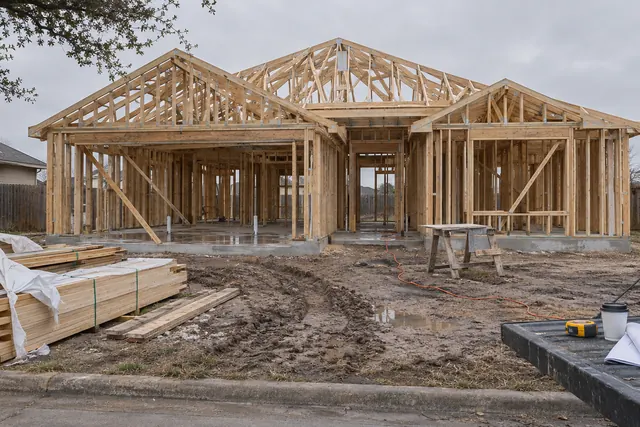 Building Cost Estimate Template with Line Items, Formulas and a Worked Example
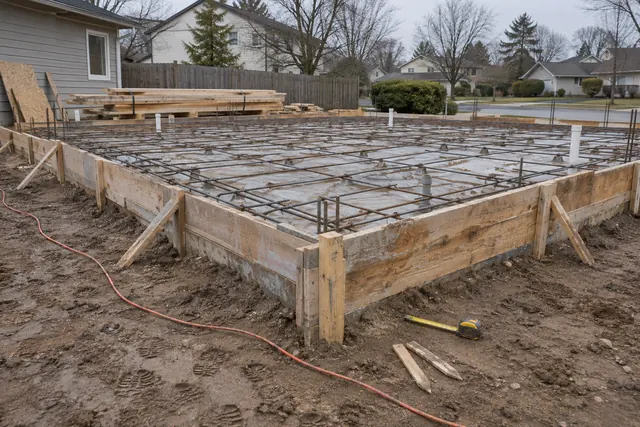 Quantity takeoff services for construction bids and estimates