Deck building estimate: costs, calculation and a sample quote
A deck building estimate in the US in 2026 usually starts at $25–40 per square foot installed for pressure-treated pine and $50–80 for mid-range composite, then moves with height, railing, stairs, soil and access. On a 16x20 ft composite deck that means roughly $16,000–25,600 before regional adjustment. All prices below are US dollars for 2026 unless noted.
- Topic
- Cost estimates
- Updated
- Reading time
- 15 min
- Studio
- Morales Arch & Design
In this article
- What a deck building estimate includes
- How to calculate a deck cost estimate
- Deck material cost and lifespan
- Footings, framing and site conditions
- Railing, stair and add-on prices
- Labor, permits and hidden costs
- Sample deck estimate and template checklist
- How to compare contractor quotes
- DIY or contractor, and ways to save
- Deck estimate FAQ
What a deck building estimate includes
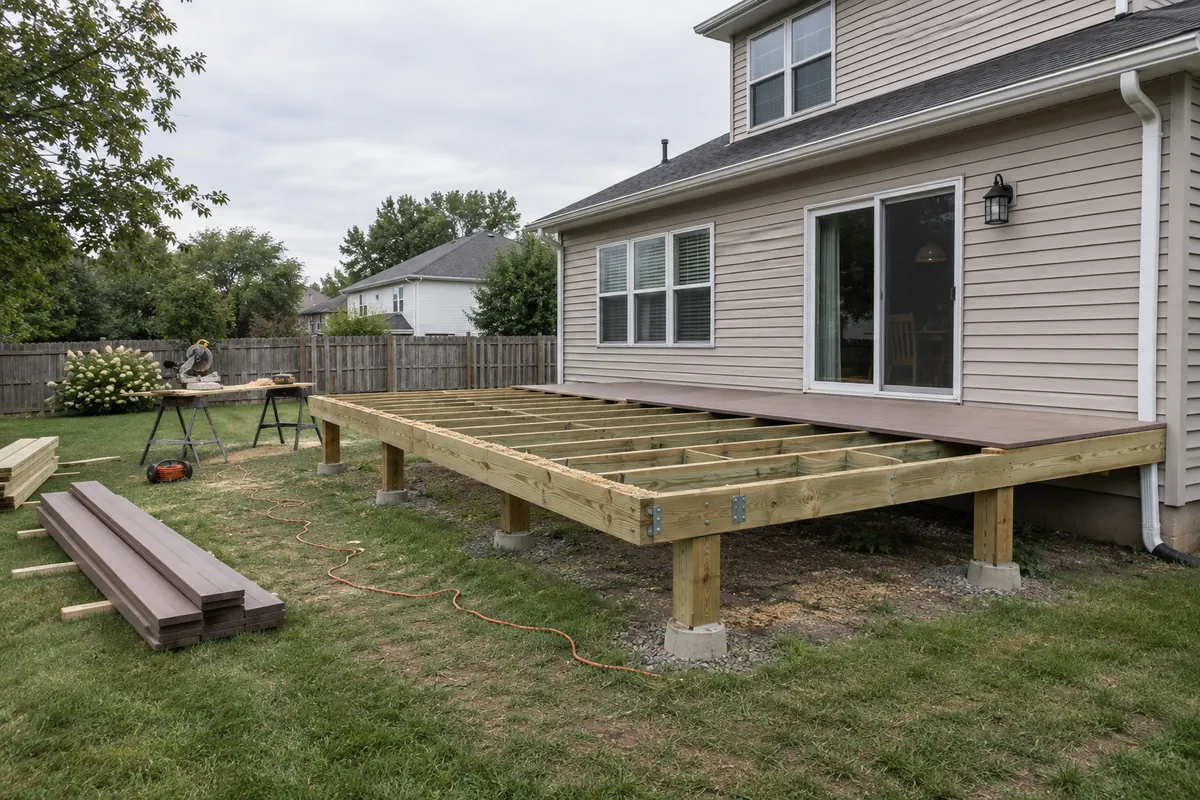
An estimate covers five cost centers: decking boards, the substructure that carries them, railing, stairs and labor. Around those sit demolition, permits, site work, electrical and a contingency. A 300 sq ft deck ends up with about eight separate cost lines, and the ones contractors most often leave out are footings, ledger and flashing, railing and stairs.
Area times a rate is a baseline only. Two decks of the same footprint can end up far apart once one of them is split into levels or fitted with lights, benches, a pergola and an outdoor kitchen, because each of these adds framing, finishing and labor hours. A plain 10x12 ft platform is a different job from a 500 sq ft multi-level deck with a custom shape and a pattern in the boards.
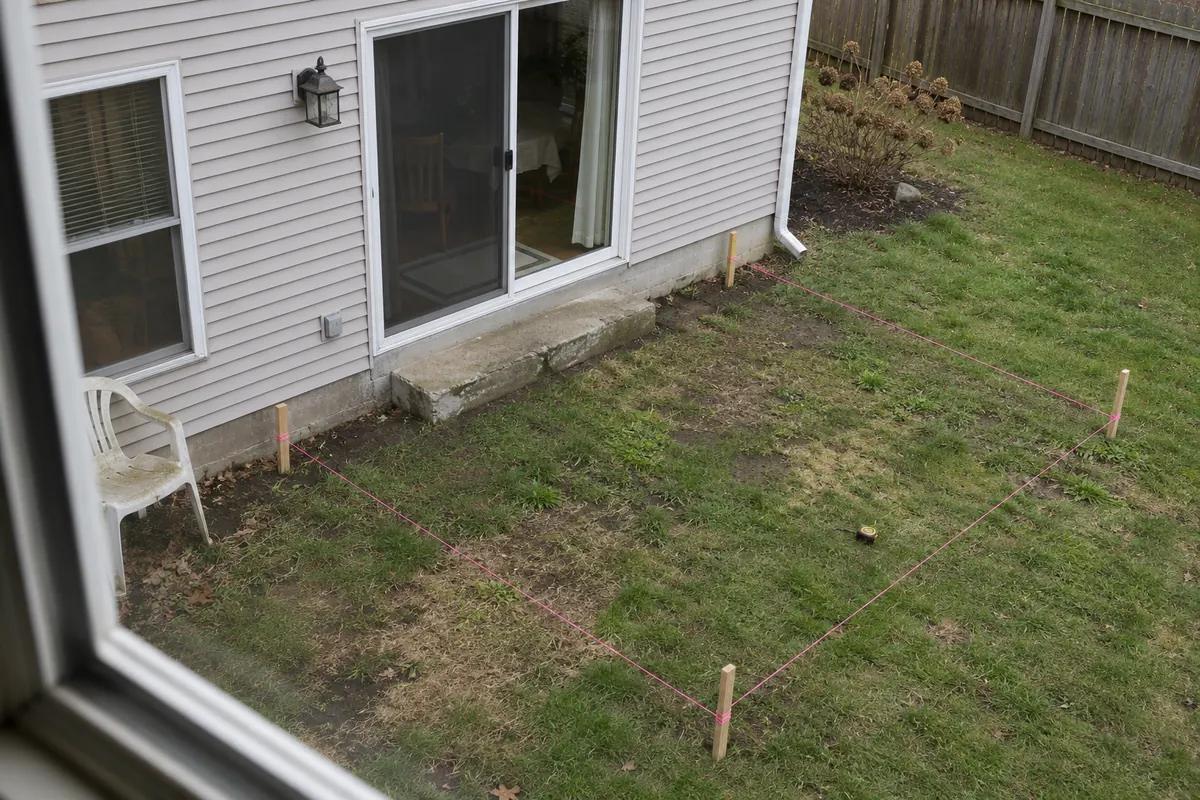
Decide how the deck will be used before fixing its size. Count the people who will normally sit there and place the grill, dining table, sectional and any future outdoor kitchen on a sketch. A deck that is too small stays frustrating. One that is too large takes money away from features you would use.
It also helps to keep the types of number apart. An online calculator gives a preliminary budget from width, length or total square feet, and approximate dimensions are enough for it. A contractor's quote follows a site visit and sets out scope, allowances, timeline, payment structure and who handles the permit. The same distinction applies to any building cost estimator: it is good for choosing between options and too rough to sign against.
How to calculate a deck cost estimate
Start with area: length times width. A 12x16 ft deck is 192 sq ft, a 16x20 ft deck is 320 sq ft. Note the height above grade at the same time, since it affects guards, stair length and engineering.
- Measure the footprint and height.
- Pick the decking material.
- Price the substructure, railing and stairs on their own lines. Joists, beams, posts and footings add about $8–14 per sq ft.
- Add labor, permit, demolition and site work.
- Add a contingency of 8–20%, with 10% as a common middle figure.
For a quick figure from an all-in rate, use this formula: area × $ per sq ft × shape × height × access + add-ons + soft costs + contingency. The shape factor runs from 1.00 for a rectangle to 1.25 for a wraparound. Height runs from 1.00 up to 1.40 for decks more than 96 in above grade, and access from 1.00 to 1.18. Vendors of calculators built this way claim to land within about 15% of contractor bids. Do not add substructure or labor a second time when the rate already includes them.
Installed cost by deck size
| Deck | Pressure-treated | Composite |
|---|---|---|
| 100–200 sq ft | $2,500–7,000 | $4,000–12,000 |
| 200–400 sq ft | $5,000–14,000 | $8,000–24,000 |
| 400–600 sq ft | $10,000–21,000 | $16,000–36,000 |
Typical jobs inside those bands: a 200 sq ft pressure-treated deck at $4,000–7,000, a raised 320 sq ft one with stairs at $7,000–11,000, 320 sq ft in composite at $9,800–14,600 and 400 sq ft of composite with cable rail at $15,600–22,600. A 320 sq ft ipe deck goes for $12,400–18,600. All-in per-square-foot rates put the same 320 sq ft composite deck noticeably higher, at $16,000–25,600, so check what each rate includes before relying on it.
Worked example, 16x20 ft composite
At $50–80 per sq ft, 320 sq ft gives $16,000–25,600 as a national figure. Regional labor multipliers are 1.22 for the Northeast, 1.28 for the West, 1.00 for the Midwest and 0.92 for the South. Applied to the whole price, they produce about $14,700–23,500 in Texas and $20,500–32,800 in the San Francisco Bay Area. Strictly, they apply to labor alone, about half the total, which narrows the gap to roughly $15,400–24,600 and $18,200–29,200.
Deck material cost and lifespan
Pressure-treated pine is normally the cheapest board to buy, and it needs the most care afterwards. Composite, made of wood fiber and recycled plastic, and PVC cost more upfront, resist rot and insects, and earn their price beside pools, on the waterfront and in yards with full sun. Tropical hardwoods such as ipe last longest and sit at the top of the scale.
| Material | Installed, per sq ft | Typical lifespan | 250 sq ft deck |
|---|---|---|---|
| Pressure-treated pine | $25–40 | 15–20 years | $6,300–8,800 |
| Cedar | $30–55 | 15–25 years | $7,500–12,500 |
| Mid-range composite | $40–80 | 25–30 years | $10,000–15,000 |
| Premium composite | $75–110 | 25–30 years | n/a |
| Ipe and other tropical hardwood | $50–140 | 40–50 years | $12,500–17,500 |
The 250 sq ft totals reflect the lower end of each installed range. Some composite manufacturers advertise a 30–50 year life. Treat that as marketing when you budget.
Boards alone, per square foot, run about $3–6 for pressure-treated, $4–8 for cedar, $7–12 for redwood and $5–14 for composite, with hardwoods above that. Other units are in use too: pressure-treated at $2–4 and cedar at $5–8 per board foot, composite at $3–7 and ipe at $7–14 per linear foot.
Counting boards and hardware
Divide the area by the coverage of the board. A 5/4x6 covers about 0.46 sq ft per linear foot, so 320 sq ft needs close to 700 linear feet, plus 10–15% waste for borders and miters. Call it 765–800 linear feet; at $3–7 per linear foot of composite, the boards alone come to about $2,300–5,600. A 12x16 ft deck with joists at 16 in on center takes 13 joists and 26 joist hangers; with structural screws, fasteners come to $180–300. Hidden clips add $0.30–0.80 per sq ft. A quantity takeoff made this way catches the hardware that a per-foot rate hides.
Upkeep over 25 years
Pressure-treated wood wants cleaning, staining and sealing every year or two. Cedar and redwood fade to silver gray without a sealer. Composite needs soap and water. Over 25 years the yearly cost is about $0.55 per sq ft for stain, $0.35 for hardwood oil and $0.04–0.05 for cleaning composite. On 320 sq ft that is around $176 a year for stain against $13–16 for composite.
Footings, framing and site conditions
The structure below the boards is where estimates drift. A standard build uses 6x6 pressure-treated posts on sonotube piers or helical piles, a double 2x10 or 2x12 beam, and joists at 16 in on center. Footing depth follows the local frost line: 36–48 in across the northern US, 60 in in parts of Minnesota, 12 in or none on the Gulf Coast. One footing in Boston costs about four times the same footing in Houston.
Where the deck meets the house, the ledger needs sound attachment and flashing that keeps water out of the wall. If the house cannot take a ledger safely, the deck becomes freestanding. That changes both the structure and the price, so it should be settled before bids go out.
Height adds cost in several places at once. An elevated deck takes taller posts, extra bracing, longer stairs and railing around the perimeter. Slopes, poor drainage and grading work also push the price above what a level, accessible yard would cost, as does a narrow gate or established landscaping that slows the crew.
Before anyone prices the job, measure and photograph these:
- the ledger location on the house wall
- the siding that has to be cut
- the path from the truck to the work area
- whatever stands there now, such as an old deck, concrete, pavers, trees or shrubs
Demolition should be a line of its own to head off a change order. Rates run $4–7 per sq ft with haul-away, and up to $10 with dump fees. Lead paint or an asbestos membrane adds $1,500–3,500 for abatement.
Railing, stair and add-on prices
Railing is priced by the linear foot, so a small elevated deck can carry a very large railing bill. It can make up 20–40% of a bid. A 56 linear foot run of cable rail costs $4,500–8,400 installed, sometimes more than the boards.
| Item | Price |
|---|---|
| Pressure-treated railing | $20–60 per linear ft |
| Composite railing | $35–70 per linear ft |
| Aluminum railing | $50–90 per linear ft |
| Cable railing | $80–150 per linear ft installed |
| Stairs, by riser | $120–200 each |
| Stairs, by length | $100–200 per linear ft of run |
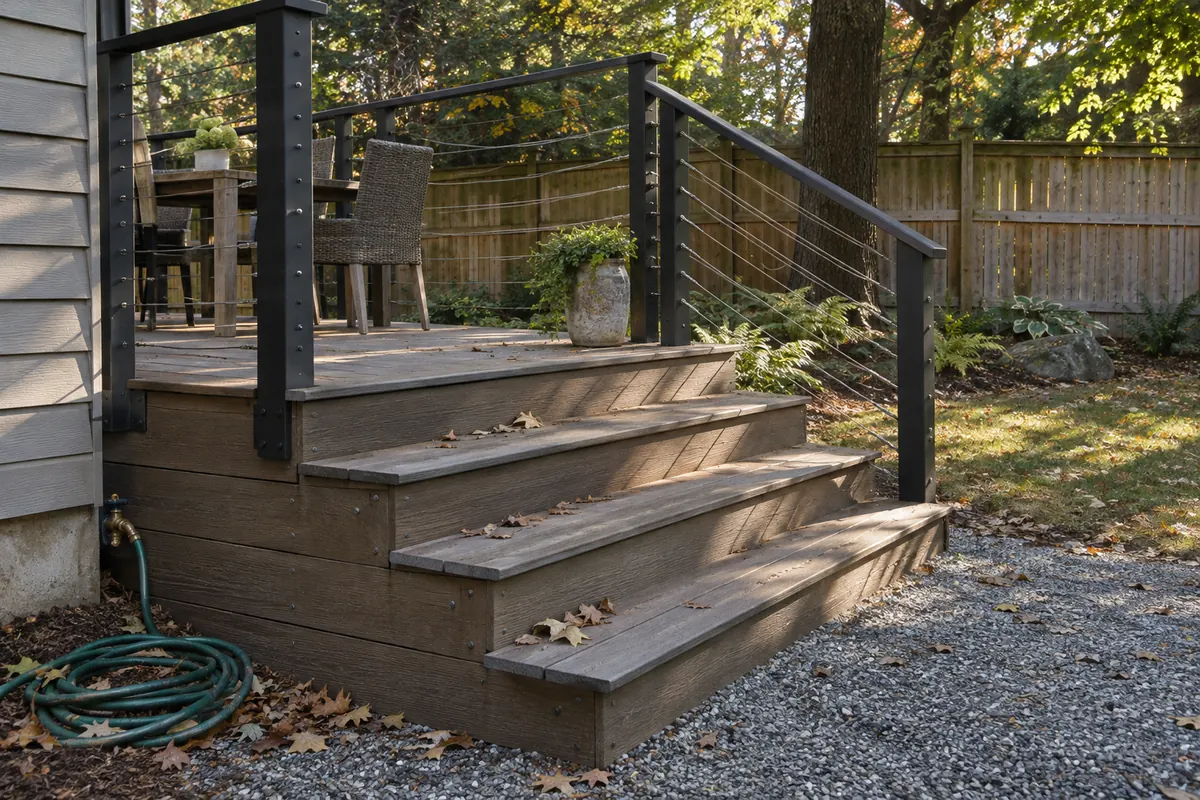
Stair prices depend on width, landings, handrails, lighting and finish. Ask which unit a bidder uses, because the same stair priced by riser and by run will not match.
Lights, outlets, ceiling fans and power for a TV or outdoor kitchen need a qualified electrician and usually a permit. Circuit or sub-panel work runs $400–1,200 when power is more than 50 ft away. Pergolas, benches and lighting can be added in a later season, but put them on the plan from the start.
Labor, permits and hidden costs
Labor takes 45–55% of a typical mid-range composite job and can pass half of the bill. No flat percentage holds for every deck. Design complexity, crew time, equipment and access set the hours, and the local market sets the rate, with big metro areas well above small towns. The median carpenter wage was $29.12 an hour in May 2025. On top of materials and labor a contractor typically marks up 15–25%, and more on composite and cable work.
California is at the expensive end; Seattle labor runs about 15–20% below it. Figures for California in 2026:
| Deck type | Labor, per sq ft | Total installed, per sq ft |
|---|---|---|
| Ground-level pressure-treated | $12–20 | $15–35 |
| Composite | $15–25 | $30–55 |
| Elevated or second-story | $22–38 | $35–65 |
| Multi-level custom | $30–50 | $50–90+ |
| Rooftop | $35–60 | $60–120+ |
Permits and engineering
Under IRC R105 a permit is generally triggered when the deck is more than 30 in above grade, attached to the house, or larger than 200 sq ft. Local rules decide the rest. The review looks at footing depth, connections, guardrail height, stair geometry and loads, and inspections usually fall at the footing, framing and final stages. Permit fees commonly sit between $100 and $800, in many places near 1.2% of project value, and the bill can reach a few thousand dollars depending on scope and location. Engineered drawings for decks over 30 in cost $300–1,200. Some projects need a plan set as well; see how much an architect costs before you leave that line at zero.
Costs that surface late
- HOA review at $50–300 and 4–12 weeks, covering setbacks, materials and height
- landscape repair after equipment, $500–2,500
- tree and shrub clearing, grading, removal of old concrete or pavers
- maintenance and repair in the years after the build
For scale, builders reported $4,722 for outdoor structures on a new home, 1.1% of construction cost (2024).
Sample deck estimate and template checklist
The sample below is a 320 sq ft composite deck with cable rail in Raleigh, North Carolina, at 2026 prices. It works out to about $64 per sq ft, with railing at almost a quarter of the total.
| Line | Amount |
|---|---|
| Demolition of existing deck | $1,420 |
| Footings | $960 |
| Pressure-treated substructure | $2,180 |
| Composite decking | $3,600 |
| Cable railing | $5,040 |
| Stairs | $1,280 |
| Labor | $5,760 |
| Permit and flashing | $320 |
| Total | $20,560 |
There is no contingency line in it. Ten percent would bring the working budget to about $22,600.
As a cross-check, the usual split on a 16x20 ft mid-range composite deck is shown below, with the dollar equivalent on a $20,800 project ($65 per sq ft). Each share is a range, so use them to check one line at a time; they will not add up to exactly 100%. The cable rail and a lighter labor line are why the Raleigh sample departs from the pattern.
| Line | Share of price | On $20,800 |
|---|---|---|
| Decking boards | 18–22% | $3,740–4,580 |
| Framing | 10–14% | $2,080–2,910 |
| Hidden fasteners | 3–5% | $620–1,040 |
| Labor | 45–55% | $9,360–11,440 |
| Railing | 8–12% | $1,660–2,500 |
| Stairs, four risers | 4–6% | $830–1,250 |
| Demolition | 0–7% | $0–1,460 |
| Permit | 1–2% | $210–420 |
| Contingency | 10% | $2,080 |
A complete written estimate carries these items:
- contractor's license
- dimensions and height above grade
- footings and their depth
- framing sizes and spacing, ledger, flashing
- decking product, fasteners, trim
- railing in linear feet, stairs by riser or run
- demolition, site preparation, electrical
- permit, engineering and the list of inspections
- payment schedule, warranty, validity period, signature
When you lay this out yourself, group the lines into four buckets: base construction, access and safety, site conditions, and enhancements. The same approach works with a general building cost estimate template.
How to compare contractor quotes
Get at least three detailed quotes based on the same precise measurements. It is the only way to see the real labor cost in your area. Compare scopes before totals, since a low price may simply leave out demolition, permits, railings or trim. Ask each bidder whether the figure covers boards only or the whole system with framing, footings, fasteners, flashing, stairs, rails, trim and permit.
Questions for every bidder:
- Who pulls the permit?
- Is the structure designed from prescriptive code tables or stamped engineering?
- Are lateral-load anchors at the ledger included, as IRC R507.9 covers?
- Are the fasteners hidden, at about $0.30 per sq ft extra?
- Is the framing lumber KDAT (kiln-dried after treatment), about 20% more expensive?
- What contingency is carried?
- How long is the labor warranty? One year is the usual figure.
- Can you give three recent references?
A single lump sum with no railing length, no footings and no word on the permit tells you little. If the gap between bids is large, put the lines side by side and look for the missing ones before negotiating.
DIY or contractor, and ways to save
Materials are about 40–50% of an installed price, so building the deck yourself can save 50–60%. Compare for 320 sq ft:
| Deck | Contractor | DIY materials |
|---|---|---|
| Budget pressure-treated, ground level | $8,000–12,800 | $3,400–5,400 |
| Mid-range composite, 36 in high | $16,000–25,600 | $7,200–11,500 |
The time cost is real. Allow 1.0–1.5 hours per sq ft at professional pace and 1.5–2.0 hours for a first-timer, which on 320 sq ft means 320–480 hours for a pro and 480–640 hours for a beginner. Add $200–400 for tools.
The cheapest route is a pressure-treated pine deck at ground level that you build yourself, at about $15–25 per sq ft in materials or $25–35 with stairs and rail. Staying under 24–30 in above grade usually removes the guard requirement and often the permit burden too. Confirm with the local building department, especially if the deck touches the house.
Simpler moves help whoever builds it. Plain rectangles waste less framing lumber, and together with a low height they can trim 10–30%. Building off-season and collecting several bids also help. Keep the contingency in the budget all the same.
On financing, home-improvement loans were quoted around 7.99% APR over 60 months in 2026, about $405 a month on $20,000. A HELOC usually costs one or two points less, while credit cards run at 18–24%.
Deck estimate FAQ
How much does a 16x20 deck cost?
At 320 sq ft, a contractor-built pressure-treated deck runs about $8,000–12,800 at ground level, and mid-range composite $16,000–25,600 nationally. Cable rail, demolition and a West Coast address push it higher.
Do I need a permit for a deck?
Usually yes if it is attached to the house, over 30 in above grade or over 200 sq ft. Local rules vary, and an HOA may require its own approval of setbacks, materials and height.
How long does it take to build a deck?
A crew of three finishes a single-level 250 sq ft deck in about 3–5 days. Permitting may add 1–3 weeks, and HOA review 4–12 weeks.
What is the cheapest decking material?
Pressure-treated pine, at $3–6 per sq ft for boards. Staining narrows its advantage: about $0.55 per sq ft a year against $0.04–0.05 for cleaning composite.
Is labor really half the cost of a deck?
Often. On a 16x20 ft composite deck it is 45–55% of the price. Raised, multi-level and rooftop decks carry more labor per square foot.
Can an online calculator replace a quote?
No. Use one that shows decking, railings, labor, permits and local rates to set a budget range, then get itemized quotes after a site visit.
 Building Cost Estimator: How to Get a House Construction Cost Estimate
 Quantity takeoff services for construction bids and estimates
 How Much Does an Architect Cost? US Architect Fees and Hourly Rates