Decoration Ideas for Office Spaces, Walls and Desks
The office decoration ideas that make the biggest difference are better lighting, one accent wall in a brand color, plants, large art or a mirror, a rug that marks a zone, and desks with the cables hidden. Start with light and clutter, then add color and personal pieces.
- Topic
- Office design
- Updated
- Reading time
- 10 min
- Studio
- Morales Arch & Design
In this article
- Where to start: the floor plan and the brand
- Fix the lighting before buying decor
- Wall color, accent wallpaper and brand colors
- Office wall decorations: ideas beyond the framed print
- Plants, flowers and scent
- Furniture, rugs and dividers as decoration
- Small office decor: storage that clears the room
- Desk decor and cheap DIY ideas
- Reception, break room and shared areas
- Office decoration questions
Where to start: the floor plan and the brand
Draw a floor plan before you buy anything. Give every piece of furniture its own spot, see what is left, and decorate that. If the desks themselves stand in the wrong places, sort out the office layout design before choosing colors.
Brand comes next. Company colors repeated in walls, desks and accessories let the room do some of the marketing. After that, work through the actual problems. A dark room and a cluttered one need different decorations, and it is easy to spend money on the wrong list.
| Problem in the room | Decoration idea to try first |
|---|---|
| Feels small | Light wall color, a mirror, vertical shelving, hidden cables |
| Dark or windowless | Natural-spectrum bulbs, lamps in several zones, portable USB LED lights |
| Bland, mostly black and white | One accent wall, colorful abstract art, patterned guest chairs |
| Noise passes between rooms | Sound insulation |
| Open room with no privacy | Dividers, rows of plants, rugs that mark zones |
| Cluttered desks | Organizers, cable box, desk stand with storage, one charging spot |
| Forgettable entrance | Wall art, an artistic mirror, logo colors |
Fix the lighting before buying decor
Lighting matters more than any other item on this list. Poor light is blamed for eye strain, headaches and fatigue, and no print on the wall makes up for that. Use all the daylight you have. Where there is little, fit bright white or natural-spectrum bulbs, and on dark days switch on lamps in several parts of the room so the ceiling is not doing all the work.
A good desk lamp takes the edge off harsh overhead fixtures. Judge it on brightness first, then on how far it adjusts, and only then on whether its style suits the desk.
If the desktop is already full, hang a pendant above it and the surface stays free. In offices without windows, decorative lights soften the glare of ceiling panels. Portable LED lights that plug into USB are handy in small rooms.
Wall color, accent wallpaper and brand colors
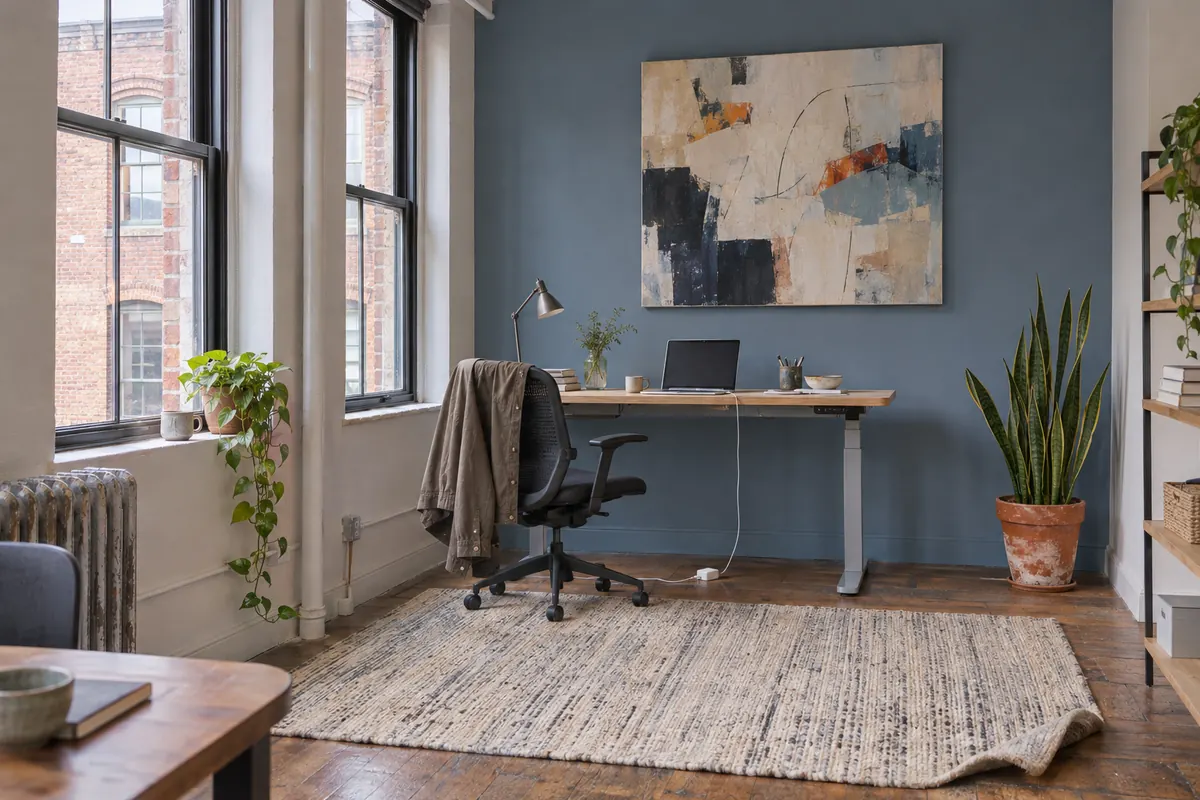
Light wall colors reflect more light, so a small office reads as larger and brighter. Save strong color or pattern for one wall. Wallpaper in particular works as a single accent surface that contrasts with the other walls; keep it off the remaining three.
A logo color can go on that accent wall and come back in a desk finish, a chair or the stationery. Repetition is what makes it look planned.
Color psychology gives a rough guide to mood, though reactions differ from person to person:
- Blue is linked with focus and trust.
- Green is associated with calm.
- Yellow is the usual pick for creative work.
- Orange adds warmth, best as a touch.
When the palette has to cover several rooms, plan it together with the rest of the office design.
Office wall decorations: ideas beyond the framed print
Corporate art tends toward black and white, which is a good reason to bring in color. Big abstract pieces add energy. Paintings, calligraphy and large-format quotes carry a message that staff see every day, and a small framed quote near a desk can help on a bad afternoon. In a common area, print the company mission statement large and treat it as artwork.
Mirrors make an office look more spacious, more open and more professional. They also have a practical use, since people can check themselves before a presentation.
Some wall pieces earn their place by being useful or personal:
- A wire grid above the desk becomes a mood board for art, photos, notes and to-do lists, and you can change it whenever you like.
- A pegboard with pegs and acrylic sheets is storage and decoration in one.
- A clear acrylic calendar above the desk shows deadlines at a glance and wipes clean.
- A minimalist bulletin board collects loose notes.
- A map of a favorite city starts conversations.
- A shadowbox with mementos from a work event is art nobody else owns.
Plants, flowers and scent
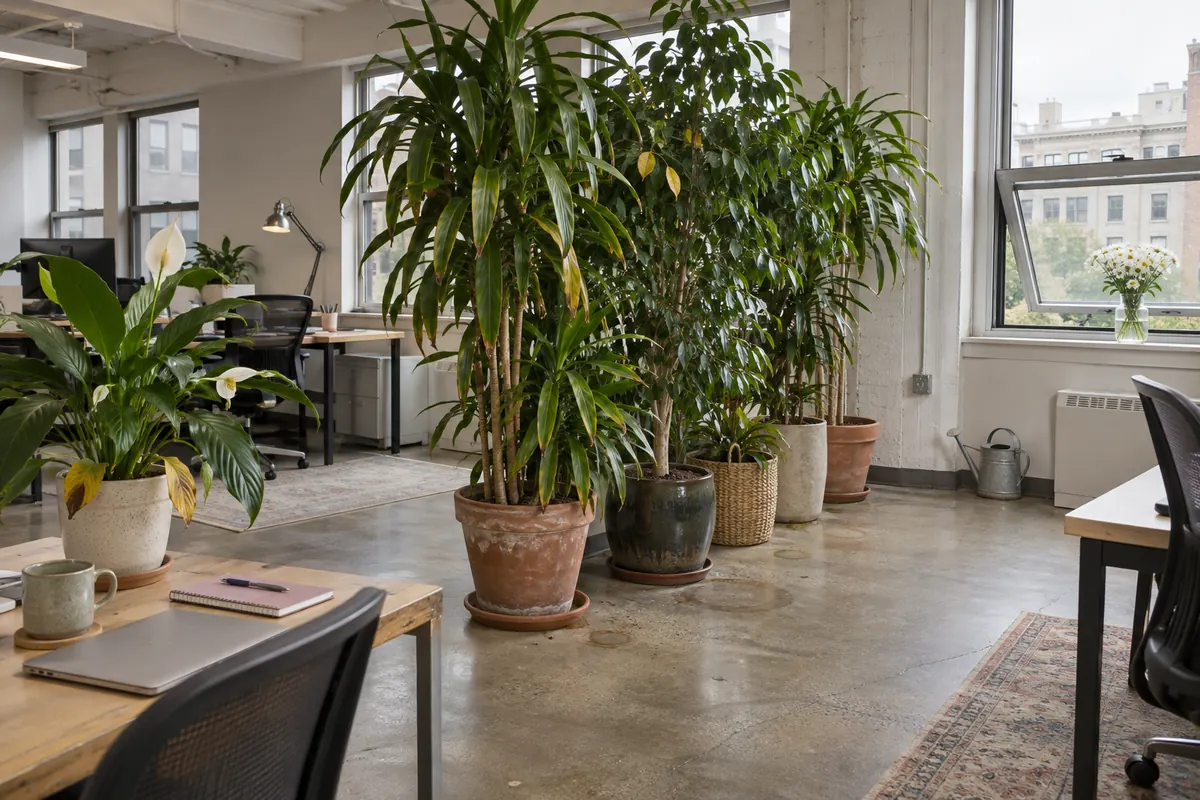
Small potted plants are an easy way to make an office feel natural and current. Studies have tied plants at work to lower stress and to higher productivity and creativity. Put one on each desk for a consistent look, or use a line of plants as a divider between zones.
| What you need | What to choose |
|---|---|
| Low maintenance | Snake plant (sansevieria), aloe |
| Color | African violets, rex begonia |
| General office greenery | Ficus benjamina, dracaena, peace lily, aglaonema, bamboo, devil's ivy, succulents, cactus |
| Cut flowers for scent | Lilies, daisies, roses, orchids in several vases |
| No light at all | Faux succulents |
For a dim office, pick species that put up with little sun, and remember they still need regular watering. A wall-mounted hanger or a floating shelf gets the pots off the desk.
Scent is part of decor too. Peppermint is considered energizing, citrus and bergamot lift the mood, lavender relieves stress, pine keeps people alert, and cinnamon or rosemary helps concentration. Open the windows for a good part of the day as well, because the room needs ventilation along with fragrance.
Scented candles look good in a stylish container, but in an office they are a fire risk. An essential oil diffuser is the safer option, and the diffuser itself can be a decorative object.
Furniture, rugs and dividers as decoration
Choose furniture that is comfortable and a little distinctive. The chair deserves the most attention: it should adjust and encourage good posture over long hours of sitting. A sit-stand desk saves space because one desk replaces two tables of different heights. It may also reduce back pain, it gets people moving, and it looks modern.
Guest seating is where you can take risks. Funky or patterned chairs with an abstract accent table break up the traditional office feel, provided they still do their job as chairs and a table.
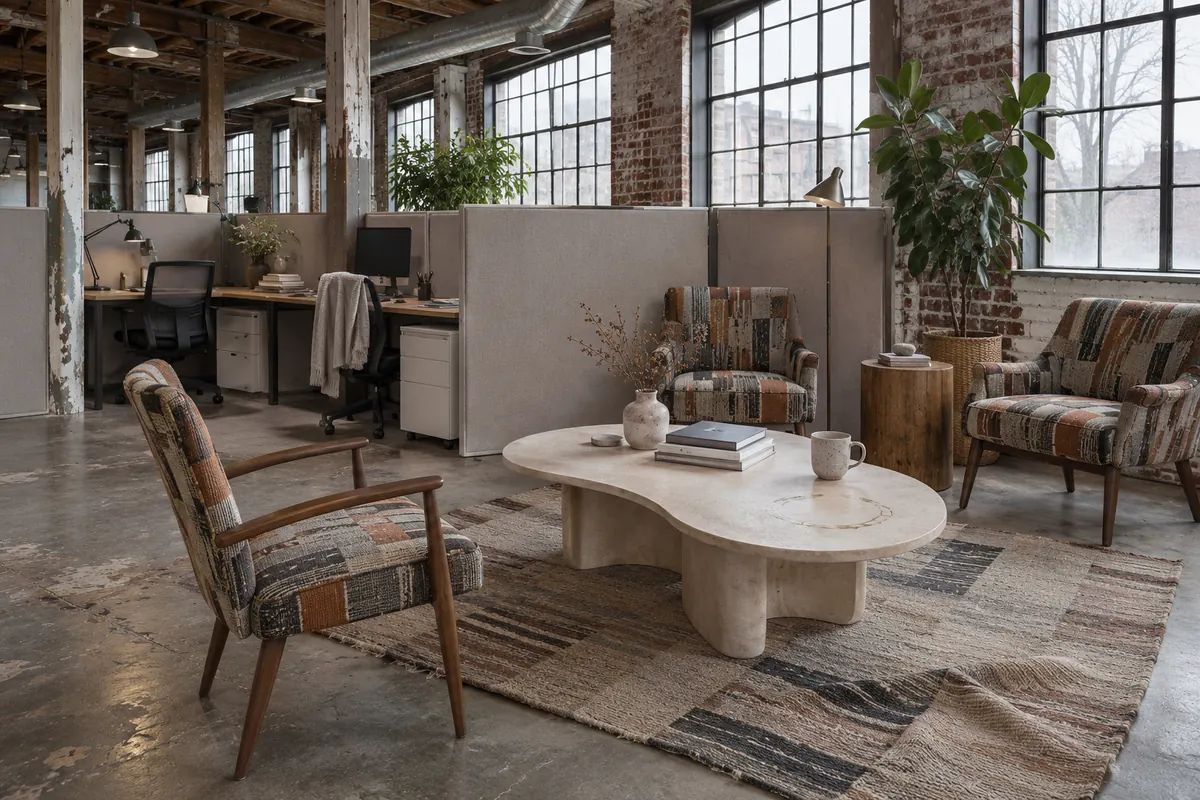
Rugs protect the floor under the desk and mark zones without building walls. Match the rug to the color scheme or set it in clear contrast. In a large office, rugs outline separate areas; in a small one, a rug ties the room together.
Dividers in place of full walls give privacy and flexibility while the space stays open, and staff can choose between a quiet corner and a shared desk. Plan sound insulation at the same stage, both for private meetings and to stop noise passing between rooms. Once you are altering walls for it, the job moves from decorating to office fit out design.
Small office decor: storage that clears the room
In a small office, storage does half the decorating. Keep the furniture minimal and go up the wall with shelves above the desk, or give one whole wall to shelving in place of extra cabinets. In a very tight room, use a fold-down desk fitted into a modular shelving unit. If you would like fewer holes in the wall, look for a desk with shelves built in.
Then deal with wiring. Visible cables make a room look cluttered and smaller. Run them behind the monitors, put chargers in a cable box, and set up one charging spot for all devices. A stand that lifts the screen can hold the keyboard, mouse and pens underneath.
Typical US retail prices in 2026:
| Item | What it handles | Price, USD |
|---|---|---|
| Desktop organizer | Folders, notebooks, clips, sticky notes | about $30 |
| Drawer organizers | Small supplies | about $56 |
| Floating four-tier shelf | Supplies, frames, plants | about $120 |
| Freestanding filing cabinet | Stray papers | about $208 |
| Wall system with pinboard, letter bin and dry-erase calendar | Mail, notes, deadlines | about $299 |
An open three-tier cart on wheels carries supplies and adds an industrial touch. Transparent jars show what is running low. Color-coding keeps order afterward: red for urgent work, blue for calm tasks, one color per category. A personal stationery box for each employee works too. Our guide to small office design has more on tight rooms.
Desk decor and cheap DIY ideas
Let people decorate their own desks. Photos of family or friends are a reminder of life outside work, and small awards on display add motivation. Frames look better when they match the style of the room.
Limit what stays on the surface to pens, a notepad and the key files, and move the rest to digital storage. A coordinated set with a tray, pen holder and wire clips looks tidier than odd pieces. A desk pad, a file organizer and a computer stand with storage will refresh a tired desk quickly. A few books or magazines add a decorative layer and something to flip through for inspiration.
Low-cost projects that still look good:
- Pen cups from recycled tins or glass jars wrapped in fabric.
- Magnetic clip holders.
- Plain wooden boxes painted in an accent color.
Office decoration questions
How do I decorate my office at work?
Begin with an adjustable desk lamp, hide the cables and clear everything but essentials. Add one plant, a framed photo, a piece of colorful art or a wall grid, and a tray or desk pad that pulls the small items together.
How can I make a small office look bigger?
Paint the walls a light color, hang a mirror, choose minimalist furniture from a floor plan and store things vertically. Keep wiring out of sight. A fold-down or sit-stand desk saves further space.
What plants are best for an office?
Snake plant and aloe are low-maintenance. Peace lily, dracaena, ficus benjamina, aglaonema and devil's ivy are also common office choices. In a room with no light, use faux succulents.
Which colors are best for an office?
Light tones on most walls, with one accent. Blue is associated with focus, green with calm, yellow with creativity and a little orange with warmth. Reactions vary from person to person.
Are scented candles a good idea in an office?
They are a fire risk in a workplace. Use an essential oil diffuser with peppermint for energy, lavender for stress or rosemary for concentration.
How do I decorate an office cheaply?
Rework what you have: wrap tins or jars as pen cups, paint wooden boxes, hide cables and group supplies by color. A desktop organizer costs about $30 in the US in 2026.
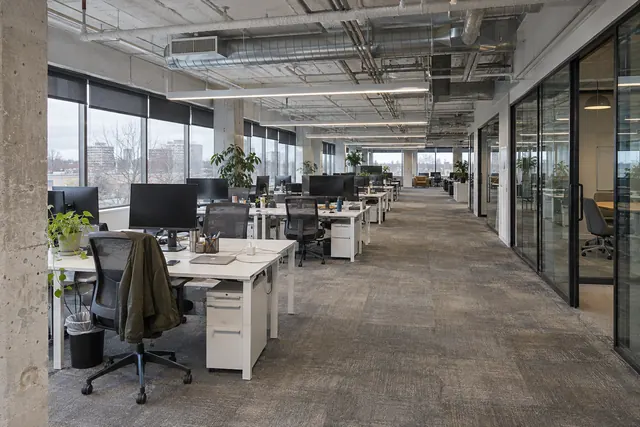 Office layout design: layout types, space per person and clearances
 Office Design: How to Plan Space, Layout, Lighting and Furniture
 Office Fit Out Design: From Empty Shell to Working Office