Landscape Architect Consultation: Cost, First Visit and Next Steps
A landscape architect consultation is a first meeting, usually one to two hours at your property, where the architect walks the site, hears your goals and you both decide whether to work together. Some firms do it for free, many charge for it, and what follows is a concept, a plan and a cost estimate.
- Topic
- Consultation
- Updated
- Reading time
- 10 min
- Studio
- Morales Arch & Design
In this article
- What a landscape architect consultation is
- Landscape architect, designer or design-build firm
- How much a landscape consultation costs
- What happens during the first meeting
- How to prepare for the consultation
- What you get after the consultation
- Questions to ask a landscape architect
- Keeping cost and timeline under control
- Choosing the right fit and reading the agreement
- Landscape consultation FAQ
What a landscape architect consultation is
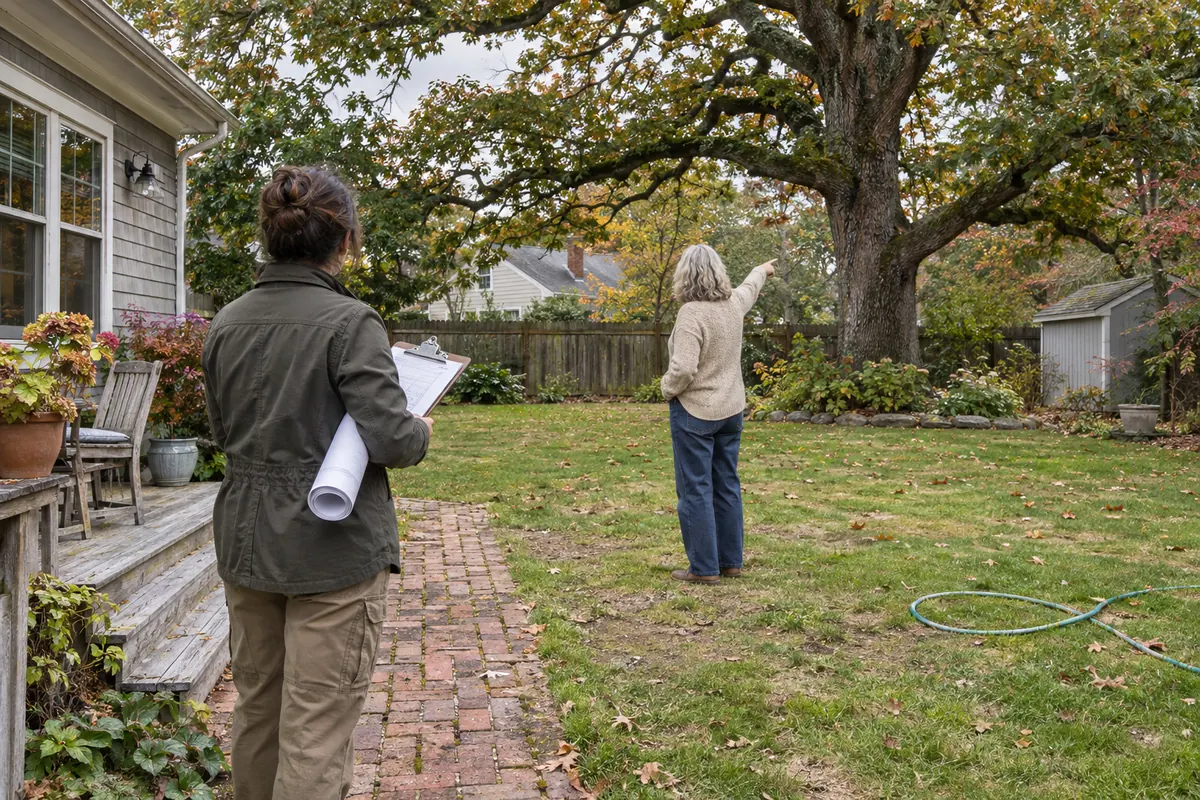
The first consultation is a working meeting at your property. The landscape architect walks the garden with you, listens to what you want from the space and starts trading ideas. It usually takes one to two hours, though a preliminary visit with a designer can be closer to an hour.
It is also a test of fit in both directions. The architect interviews you as much as you interview them: what you want, how involved you plan to be, whether the budget matches the scope. You check whether their thinking and style suit your house and your habits.
Before the meeting, decide what role you want to play. Some clients like to collaborate on every choice, some prefer to defer completely to the professional, and some want a clear plan they can hand to a builder. Saying this early shapes everything that follows, from the drawings to the fee.
Do not expect a finished concept at the end of the visit. A good architect needs time to study the site, so the first meeting is mostly about gathering information.
Landscape architect, designer or design-build firm
In the US, a licence is required to practice landscape architecture in all 50 states and DC. The path is an accredited degree, supervised experience, the L.A.R.E. exam run by CLARB, and then a state licence. The letters PLA (or RLA in some states) show an active licence. Licences are issued and enforced by state boards, not by ASLA, so verify a licence with the board in your state.
A landscape designer may not hold a licence. For a garden-scale project that can be fine, but then look harder at training and professional memberships.
Firms also differ in what they deliver:
| Service model | What is included | Who builds it |
|---|---|---|
| Design only | Site analysis, preliminary design, revisions, final master plan | You or a contractor you choose |
| Design-build | The design plus buying plants and overseeing installation | The firm or its crew |
| Full service | Design-build plus ongoing maintenance | The firm, then its maintenance team |
With design only, ask yourself whether you have time to oversee installation. Hardscape work and permits need contractors anyway: some designers are registered contractors, some have a team, others recommend one. If you are also planning work on the house, an architect consultation for the building covers a different scope.
How much a landscape consultation costs
Free first consultations exist, mostly at design-build firms that earn their money on installation. Before booking, they ask about scope, start date and location to check whether the project suits them.
Independent designers and architects more often charge, since two hours of professional time on your site is real work. Paying for the visit also filters out people who are not serious. Common arrangements:
- a paid visit where the fee is credited toward the design if you hire the firm;
- no charge for the first on-site meeting if you sign on later;
- a paid consultation followed by a written estimate, a design agreement and a 50% retainer.
Some designers quote the range of design fees and typical project costs in the very first phone call. Ask for it if they do not offer it. Landscape architects typically bill about $70-150 per hour or 5-15% of project cost, and consultations are sometimes billed at up to $50 per hour more. For the building side of a project, see how much an architect costs.
What happens during the first meeting
The architect walks the landscape, takes notes and photos and may measure. On a first visit they look at:
- sun and shade across the day;
- soil;
- property lines;
- existing large trees and views worth keeping or hiding;
- the style of the house, inside and out.
Many architects take photos and sketch a rough concept on the spot. Still, the most important input comes from you: how you use the garden, who uses it and what bothers you about it now. Few ideas get settled at this stage, and that is normal.
How to prepare for the consultation
Write a wish list before anyone visits. Sort it into must-haves, maybes and wishes, set priorities and settle on a budget. Then think through the questions the architect is likely to ask:
- Do you lean modern or traditional?
- How often are you outdoors, and what does the family do there?
- How much do sustainability and water use matter?
- How much maintenance will you do, or how much will you pay a gardener for?
- Which landscapes have you liked, here or on trips?
Bring photos of styles and plants you like, and note dislikes too: colors, fragrances, certain flowers. Practical needs are easy to forget, such as tool storage, space for vegetables or a shaded seat.
If you have a detailed site plan showing terrain, property lines, buildings, utilities and existing plants, hand it over. It saves time; without it, the designer measures by hand and draws a base plan, which you will pay for.
Be honest about money. A stated budget does not mean the designer will spend all of it. It tells them what can realistically be designed.
What you get after the consultation
Not every project needs a full design. For a simpler job, a detailed proposal with a plant list may be enough. A custom design suits bigger projects or work you plan to build in phases. A proposal can arrive within 5-10 days of the meeting.
When a full design is ordered, the work usually runs like this:
- Base plan of the site, after one or several site visits.
- Rough sketch or detailed conceptual drawing with a written project description.
- Your review and feedback.
- 2D working drawing showing hardscape and where each plant goes.
- Final drawing with a proposal, a rough timeline and a cost estimate.
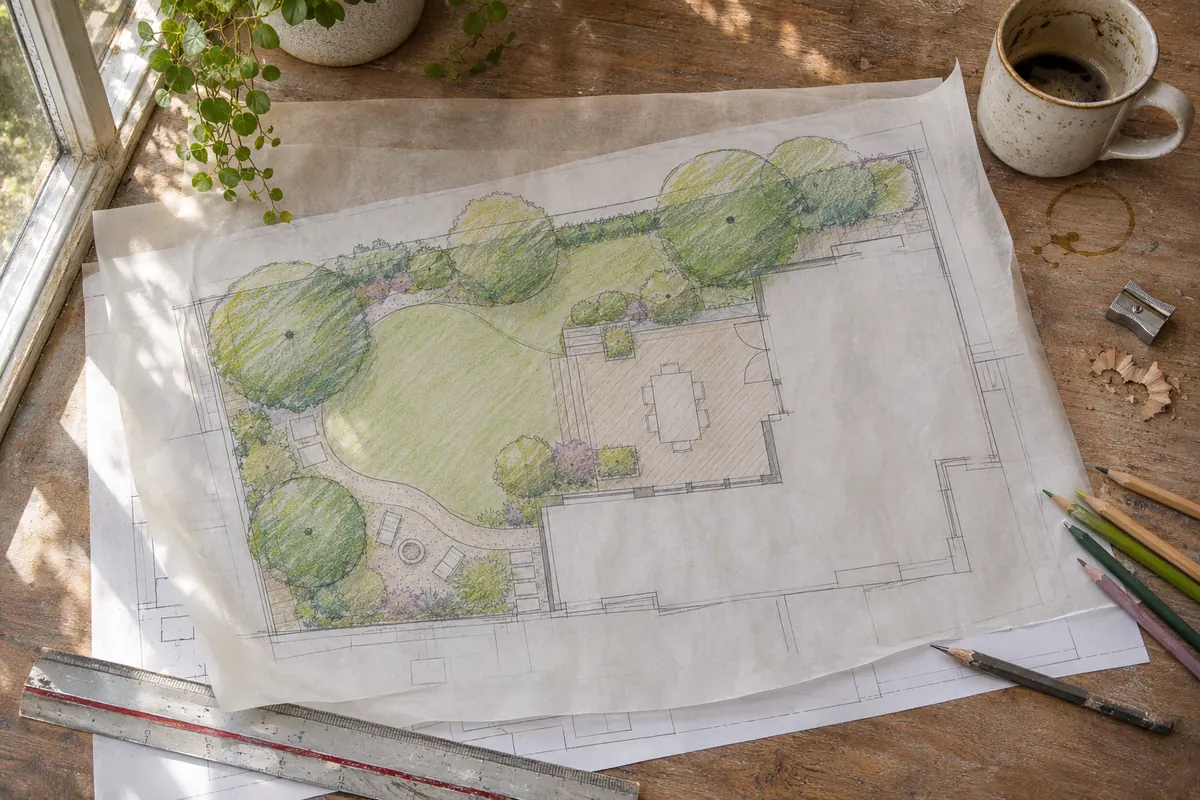
Ideas may come as mood boards, hand drawings or to-scale 2D CAD drawings, and a revised drawing follows your comments. Large projects go through several revisions. Speak up at the concept review about anything you dislike or anything missing. Design software makes revisions quick, and a simple plan costs less than a full drawing set. If you want to see the scheme in 3D, check what rendering usually costs before asking for it.
Questions to ask a landscape architect
Use the consultation to get straight answers on the points that cause trouble later:
- Which services do you offer: design only, design-build or full service?
- Can I see past work similar to mine? A modern city garden and a cottage garden need different hands.
- How do you work, and what is your vision for this space?
- What is the process from here, and how many revisions are included?
- What are the cost ranges for design and for installation?
- How are scope changes handled, and is redesign time charged during design and installation?
- Who chooses the contractor?
- How long will the project take, and how long until the plants fill in?
- How much maintenance will the garden need, and can you recommend maintenance gardeners?
On contractors, the architect usually suggests one they trust and acts as a go-between who translates the drawings on site. You decide who deals with the contractor directly. Installation estimates normally come from the contractor, often priced per square foot of hardscape.
Keeping cost and timeline under control
Hardscape drives the bill. Paths, patios, retaining walls and decks cost more than planted beds, and material prices vary widely. Rough numbers can be run early, for example for a 1,000 sq ft concrete patio, and included in the project description. Ways to bring the total down:
- shrink the patio;
- choose different pavers, or space them widely with plants between;
- build in phases;
- do some of the planting yourself.
If a deck is part of the plan, a deck building estimate helps you test that line separately.
Ask for an estimated time window, not a fixed completion date tied to an event such as a wedding. Project size, contractor availability, delivery of materials and plants, dry weather and surprises like bad soil all move the schedule. Booking also takes time: busy firms often start 9 or more weeks out, 12-20 weeks in summer, so it pays to get in touch about five months ahead.
Plants need time after installation too. Small areas of grasses, perennials or succulents fill in within about one season, roughly six months. Big shrubs and trees take a year or more, sometimes years. For a focal point or a privacy screen, it can be worth paying more for semi-mature specimens.
Choosing the right fit and reading the agreement
Trust your instincts about how the meeting felt. If nobody referred you, ask for examples of finished work and call references. When the portfolio does not show your style, look at training and professional memberships, and for licensed work confirm the licence with the state board.
Read the design agreement before paying a retainer. It should state who owns the plans. Some agreements restrict design services to clients who also hire the designer for installation, which matters if you planned to get competing bids or build it yourself. Check how revisions and scope changes are billed, and what the retainer covers.
Where hardscape, grading or permits are involved, licensing and permit rules depend on your state and municipality. Confirm with the local building department which drawings and signatures it requires.
Landscape consultation FAQ
Is a landscape architect consultation free?
Sometimes. Design-build firms often offer a free first visit, while independent designers and architects usually charge. Some credit the fee toward the design or waive it if you hire them.
How long does a landscape consultation take?
Usually one to two hours on site. A preliminary visit with a garden designer can be about an hour.
What should I bring to the first meeting?
A wish list sorted into must-haves, maybes and wishes, a budget, photos of gardens and plants you like, a list of dislikes and, if you have one, a site plan with property lines, buildings, utilities and existing plants.
What does the architect do on the first visit?
They walk the property, take notes and photos, may measure, and look at sun and shade, soil, boundaries, existing trees, views and the style of the house. They also ask a lot about how you use the space.
Should I choose design only or design-build?
Design only gives you a plan to build with any contractor, but you or someone you hire must oversee installation. Design-build adds plant buying and installation oversight; full service adds maintenance.
How long until a new garden grows in?
Grasses, perennials and succulents fill small areas in about six months to one season. Large shrubs and trees take a year or more.
Who hires the contractor?
The architect usually recommends a contractor they trust and helps explain the drawings, but you decide who contracts and communicates with the builder.
 Architect Consultation: What Happens, What It Costs and How to Prepare
 How Much Does an Architect Cost? US Architect Fees and Hourly Rates
 Rendering price: what 3D architectural rendering costs per image