Master Plumbing: The Master Plumber License, Scope and Requirements
Master plumbing is plumbing work planned, supervised or carried out under a master plumber license, the top individual license in the trade. A master plumber has more years in the field than a journeyman, has passed a harder exam on code and practice, and can supervise crews, pull permits and in many places run a plumbing business. The rules are set by each state, county or city, so the path and the fees depend on where you work.
- Topic
- Plumbing design
- Updated
- Reading time
- 16 min
- Studio
- Morales Arch & Design
In this article
- What master plumbing means
- Apprentice, journeyman, master, contractor: the license ladder
- What a master plumber can do
- How to become a master plumber
- Master plumber requirements by state and city
- Master plumber exam, fees and timeline
- Master plumber vs plumbing contractor license
- Master plumbing in design and permit projects
- How to hire a master plumber and avoid unlicensed work
- Master plumbing FAQ
What master plumbing means
In the trade, "master" is a license level, not a marketing word. A master plumber is the person who plans or supervises the design, installation and repair of plumbing systems and is expected to know the laws and rules that govern that work. Iowa's licensing office uses almost exactly that definition, and it extends the master title to mechanical, HVAC and hydronic disciplines as well.
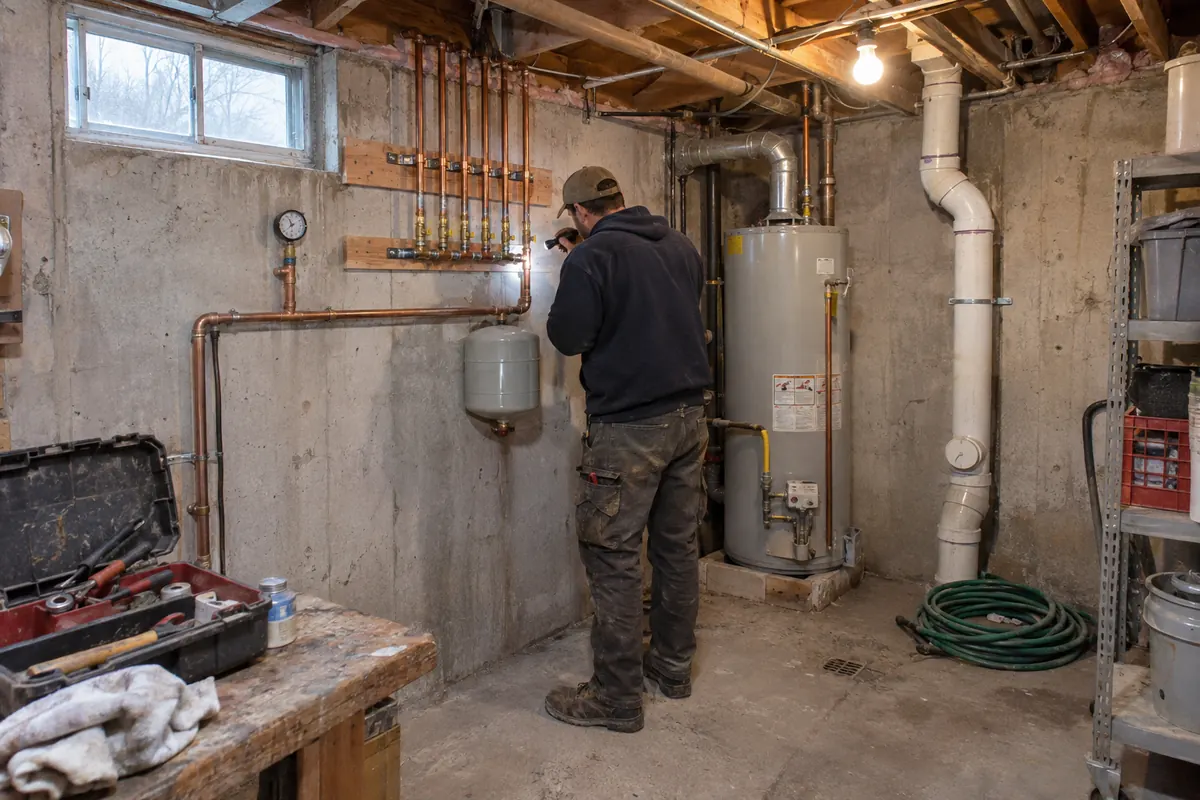
The title sits above apprentice and journeyman. To reach it, a plumber logs more years in the field, passes a harder exam built around the local plumbing code and practice, and takes on legal responsibility for the crews and installations under their name. In most places the master is the one who can pull permits, supervise journeymen and apprentices, take on complex projects and own a plumbing business.
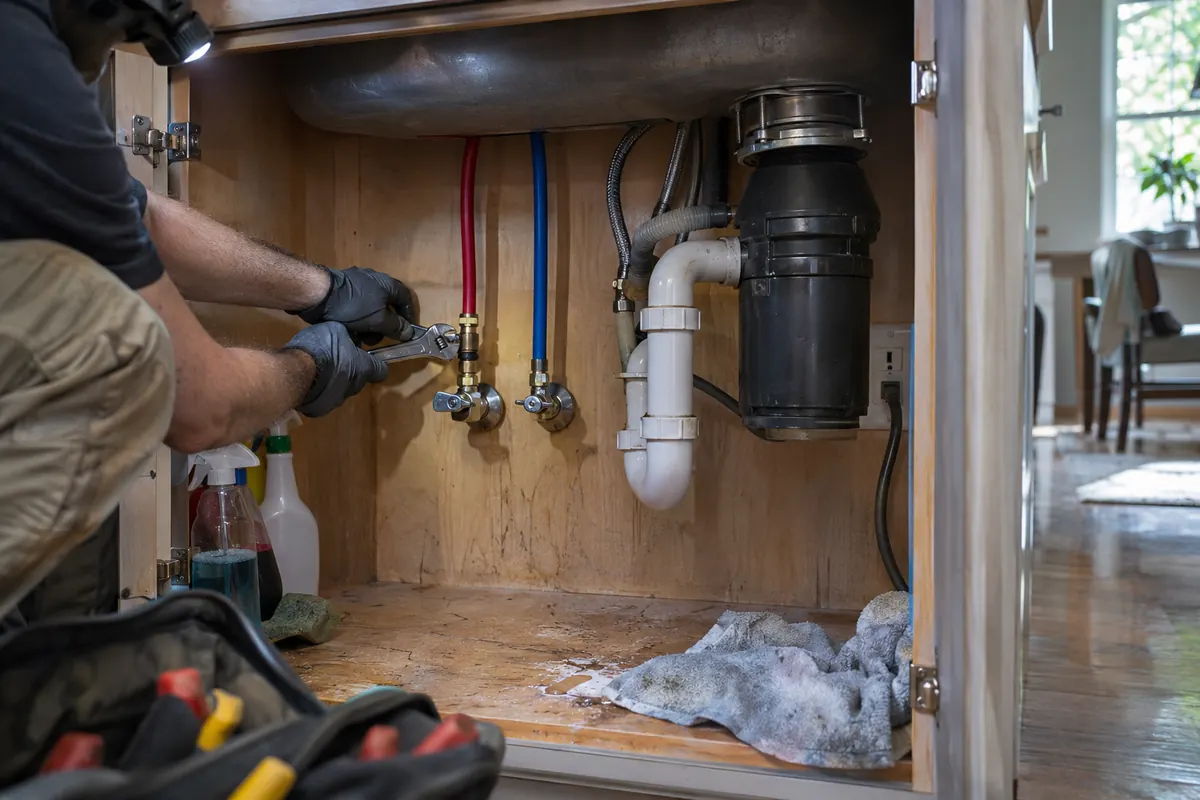
There is no federal plumbing license in the United States. Each state sets its own rules, and in some states the county or city does. Exams, fees, experience and even the names of the licenses change from one jurisdiction to the next. Kansas and Missouri, for example, have no statewide plumbing license, but their cities and counties can require one. California and Florida don't issue an individual master license at all and license plumbing contractors instead.
So when someone searches for master plumbing, they usually want one of two things: a licensed master plumber for a job, or the route to becoming one. Both depend on where the work happens.
Apprentice, journeyman, master, contractor: the license ladder
Most states follow the same ladder, with different hours and fees at each rung. Specialty licenses sit beside it for work like medical gas, backflow testing, irrigation and pipefitting.
| Level | What it means | What the holder can do |
|---|---|---|
| Apprentice or trainee | Entry level. Theory in class plus on-the-job training under licensed plumbers. Most states require no exam at this stage. | Work only under supervision. |
| Journeyman | Apprenticeship completed and the state board exam passed. | Work independently, for example residential repairs or new construction. |
| Master | More years of experience and a harder exam. | Supervise journeymen and apprentices, pull permits, take on complex projects, often own a plumbing business. |
| Plumbing contractor | A license for the person or company that runs the business. | Bid on work and employ licensed plumbers. Often requires a master on staff, liability insurance and workers' comp. |
The pay follows the ladder. Apprentices earn the least, and masters earn the most because the license proves the highest level of skill. Bureau of Labor Statistics data put average plumber pay at about $60,090 a year, a figure that covers all plumbers, not masters only. BLS counts about 504,500 plumbers nationwide and projects 5% growth from 2024 to 2034.
Not every plumber climbs to the top. Plenty of experienced tradespeople stay journeymen for their whole career because they have no interest in supervising crews or running a company. The master license makes sense when you want to sign off on work, lead jobs or start a business.
What a master plumber can do
The legal scope is written by each board, but it tends to cover the same ground. Texas defines a master plumber as someone who installs, changes, repairs, services or renovates plumbing under a Responsible Master Plumber, and who directly supervises apprentices. On jobs other than one- and two-family homes, a Texas master can also supervise limited tradesmen.
In practice, a master's work usually includes:
- planning and laying out supply, drain, waste and vent systems;
- pulling permits and taking responsibility for code compliance;
- supervising journeymen and apprentices on site;
- taking on complex projects that a journeyman would not run alone;
- acting as the license holder of record for a plumbing company.
Supervision has limits. In Iowa a master can supervise journeypersons and apprentices only in the discipline the master is licensed for, must not knowingly supervise unlicensed people, and must not work for an unlicensed contractor.
Endorsements and specialty work
Some work needs more than the master license. Texas offers three endorsements for masters: medical gas piping installation, multipurpose residential fire protection sprinkler, and water supply protection specialist. Other states license medical gas and backflow work separately. Arkansas, for example, issues specialty licenses for both.
Master of record
Many states tie a contractor's license to a named master. Iowa calls this the master of record: one master can serve one contractor per discipline at a time unless the board approves otherwise, and must notify both the board and the contractor within 30 days of leaving. Alabama requires plumbing companies to name a Principal Master. Texas uses the term Responsible Master Plumber.
How to become a master plumber
The general path looks the same in most states, even though the hours and years differ:
- Be at least 18 and hold a high school diploma or GED.
- Enter an apprenticeship, through a trade school, a union or employer program, or a master plumber who takes apprentices.
- Log the required on-the-job and classroom hours.
- Pass the journeyman exam on trade knowledge and local code.
- Work as a journeyman for the required number of years.
- Pass the master exam and any background check.
- Get a contractor license if you plan to run your own business.
- Keep up with renewal and continuing education.
How long it takes depends on the state. In Alabama, two years of apprenticeship or documented experience leads to the journeyman exam, followed by one year as a journeyman before the master exam. Arkansas asks for four years of documented work for journeyman, then one year as a journeyman before the master application. New Jersey sets the master age at 21 and asks for five years in the trade: four as an apprentice and one as a journeyman. New York City asks for seven years out of the previous ten, which makes it one of the longest routes.
Engineers and architects sometimes get a shorter path. New Jersey accepts an engineering bachelor's degree route. New York City accepts a mechanical engineering or engineering technology bachelor's degree plus five years of experience, or a New York State registered architect or professional engineer license plus three years.
If you are starting out, look at trade schools in your area, talk to local master plumbers who take on apprentices, and read the exact requirements of your state board at each level before you plan the years ahead.
Master plumber requirements by state and city
A few jurisdictions show how wide the range is.
New York City
Every master plumber application now goes through DOB NOW: Licensing, with no walk-in or paper applications. Basic qualifications: at least 18, able to read and write English, physically fit to do the work, and of good moral character. The main experience route is seven years in the previous ten installing and planning or designing plumbing under a licensed master, with at least two of those years as a registered journeyman. The degree route needs five years in the previous seven, at least two in NYC. A registered architect or professional engineer needs three years in the previous five, at least one in NYC. Inspection work for a government or private inspection agency is credited at half its length, capped at 2.5 years.
After the exams comes a background investigation: a physician's physical form completed within 90 days, experience verification signed by every supervisor (signatures from HR or from the applicant don't count), Social Security earnings history, photo ID, the Social Security card and the latest pay stub or W-2. Documents must be notarized within 90 days. You have one year from the practical exam result notice to submit this application.

Texas
To sit the Texas master exam, you need a journeyman license from Texas or another state held for two years, or for one year plus a training program approved by the US Department of Labor. A master licensed in another state qualifies on the same journeyman terms. All applicants give fingerprints once, and anyone with a felony conviction files a supplemental criminal history form.
Iowa
Iowa asks for age 18 or older, disclosure of criminal convictions (felonies are reviewed by the board) and a passed master exam. You also need either a master license from another jurisdiction or a journeyperson license plus two years of experience.
New Jersey
Only the master license is issued by the state, through the State Board of Examiners of Master Plumbers. Apprentices and journeymen are registered rather than licensed. Apprentices must be at least 16 or 18, depending on the program, enroll in a US Department of Labor apprenticeship, and complete 2,000 on-the-job hours and 144 classroom hours a year for four years. Journeyman registration needs age 18, the full four-year apprenticeship (8,000 hours on the job and 576 in class) and a $50 fee, or $75 if you never registered as an apprentice.
States without a master title
- Arizona: no statewide journeyman license. Contractors are licensed by the Registrar of Contractors, usually with about four years of journeyman-level experience and a trade exam, under class R-37 for residential and C-37 for commercial, with a license bond and liability insurance.
- California: no individual master license. The state licenses plumbing contractors, and a C-36 license from the CSLB is needed for plumbing jobs above $500.
- Florida: registered and certified plumbing contractor licenses rather than a master title.
- Connecticut: unlimited journeyman and unlimited plumbing contractor licenses through the Department of Consumer Protection.
- Kansas and Missouri: no statewide licensing, with local rules in many cities and counties.
Georgia splits master plumbers into class one and class two. Delaware licenses masters through its board of examiners for plumbing, HVAC and refrigeration. Hawaii, Colorado and Alaska also have master levels. Alaska licenses individuals and contractors through licenses or certificates of fitness, requires bonding and insurance for contractors, and municipalities can add their own rules.
Master plumber exam, fees and timeline
Fees are set by each board and its testing provider. The 2026 fees:
| Jurisdiction | Exam and application | License and other costs |
|---|---|---|
| New York City | Written exam $585, practical exam $530 | Business insurance and documents on top |
| Texas | $25 exam processing to the board, $128.50 exam fee to Pearson VUE | $75 initial license, $75 renewal; late renewal $37.50 under 90 days, $75 over 90 days |
| Iowa | $35 exam approval application per trade, $95 exam fee per attempt to the test provider | Prorated license fee after passing; $20 license verification for reciprocity |
| New Jersey | $100 application fee | $160 license fee ($80 if you apply in the second year of the cycle), $3,000 surety bond |
The exam itself covers trade knowledge and the local plumbing code. In New York City the written exam is multiple choice, tests the NYC Construction Codes, allows no reference materials and has a 70% pass mark. The fee is paid by eCheck or credit card. Once the application is accepted, the scheduling email usually comes in two to three weeks, and the exams are held at several sites across New York State. The practical exam needs a separate application and can only be taken after passing the written one. You get 24 months from the written result notice to pass it, and the result letter arrives by mail in about three to four weeks.
Iowa takes about two weeks to process the exam approval application. New Jersey asks for a work experience form, W-2s and an apprenticeship completion certificate or transcript with the master application.
Renewal and continuing education
Getting the license is not the end. Many states pair journeyman and master licenses with continuing education or periodic renewal, and the hours and cycles differ by state. If you plan to work in more than one state, check each board's renewal rules separately.
Master plumber vs plumbing contractor license
The master license is personal: it proves what one person knows and can supervise. A contractor license covers the business that bids on jobs and employs plumbers. In many states the contractor license depends on having a master on staff, plus general liability insurance and workers' compensation. Insurance and bond rules often come from local jurisdictions and project owners as well, not just from the license itself.
Arkansas issues a separate contractor license for running a plumbing business. In New Jersey, a master who owns at least 10% of a plumbing business files a bona fide representative registration form.
New York City is strict about the business side. The master plumber applicant must be an officer, partner or sole proprietor of the business. The business needs a location in NYC in a commercial zone, general liability, workers' comp and disability insurance, and a phone bill (or a utility bill or lease) in the company's name. Corporate applicants also submit corporation papers: certificate of incorporation, filing receipt, officer minutes and bylaws.
If you only want to work for a plumbing company, a master license may be enough. If you want to bid on jobs under your own name, plan for the contractor license, insurance and bond as a separate step with its own costs.
Master plumbing in design and permit projects
The master plumber's role starts before the pipes go in. The Iowa definition puts planning and supervising the design of plumbing first, and the New York City experience requirement counts years spent planning and designing plumbing, not only installing it. That's why masters often work closely with architects and designers on new buildings, additions and remodels.
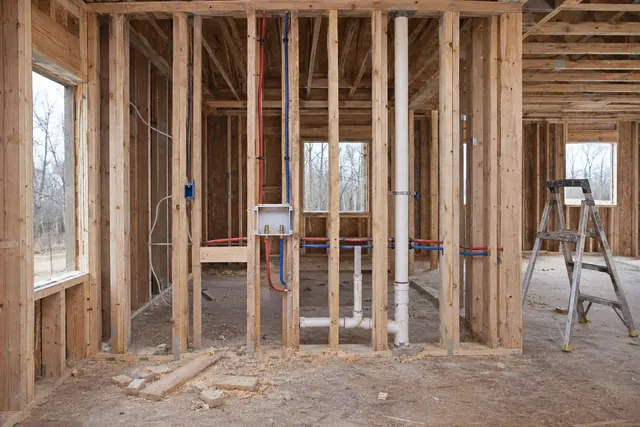
On a typical project, the plumbing scope shows up in the plumbing drawings for permit, the plumbing riser diagram that shows how drains, vents and supply lines run between floors, and the plumbing layout on each floor plan. The master is the one who pulls the permit and answers for the installation matching the approved set and the code.
Medical gas, fire sprinkler and backflow work are good examples of where the design and the license meet. Each needs the right endorsement or specialty license, and the drawings have to account for it. When a project includes these systems, confirm early that the plumber on the job holds the endorsement your state requires.
How to hire a master plumber and avoid unlicensed work
Unlicensed plumbing work carries real penalties. In most states it can lead to heavy fines and even jail time, and a plumber's license can be suspended. Employers routinely run background checks and ask for proof of certification, and homeowners should do the same.
Before you hire, check:
- the license number and its status with the state board, or with the city or county where local licensing applies;
- that the license level fits the job: a master or a contractor license for permit work and business contracts, plus an endorsement for medical gas, sprinklers or backflow;
- general liability insurance and workers' comp for the company;
- in states like California, a contractor license for plumbing jobs above $500;
- who the master of record or responsible master is, if you are hiring a company.
Ask who will pull the permit and who will supervise the crew on site. A company advertising master plumbing should be able to name the licensed master behind the work and show the license on request.
License verification is done through the state board. If the plumber works in a state without statewide licensing, check with the city or county instead.
Master plumbing FAQ
How long does it take to become a master plumber?
Usually several years. Alabama allows the master exam after about three years (two as an apprentice and one as a journeyman). New Jersey asks for five years in the trade, and New York City for seven years out of the previous ten.
Do I need a journeyman license first?
In most states, yes. Texas requires a journeyman license held for two years, or one year plus an approved training program. Iowa accepts a journeyperson license plus two years, or a master license from another jurisdiction. Engineers and architects have alternative routes in New York City and New Jersey.
Which states do not issue a master plumber license?
California and Florida license plumbing contractors rather than individual masters. Arizona has no statewide journeyman license and licenses contractors. Kansas and Missouri have no statewide licensing, although cities and counties may.
Does a master plumber license transfer to another state?
Not automatically. Iowa and South Dakota have had one since May 2016: exam-based licenses transfer without a new exam, grandfathered licenses don't, and license verification costs $20. Texas lets a master from another state sit the Texas exam if they meet the journeyman experience terms.
How much do master plumber exams cost?
In 2026: $585 for the written and $530 for the practical exam in New York City; $25 plus $128.50 in Texas; $35 plus $95 per attempt in Iowa; a $100 application fee in New Jersey. License fees, bonds and insurance come on top.
Do I need a separate business license to run a plumbing company?
Often, yes. Many states issue a separate plumbing contractor license that requires a master on staff, liability insurance and workers' comp. New Jersey also requires a $3,000 surety bond for the master license.
What happens if someone does plumbing without a license?
In most states unlicensed plumbing can bring heavy fines and even jail time, and a licensed plumber who breaks the rules can have the license suspended. Check with your state board for the exact penalties.
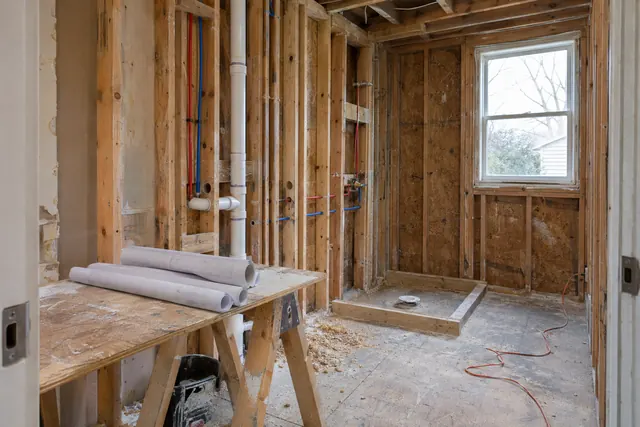 Plumbing Drawings for Permit: What Goes in the Set and How to File It
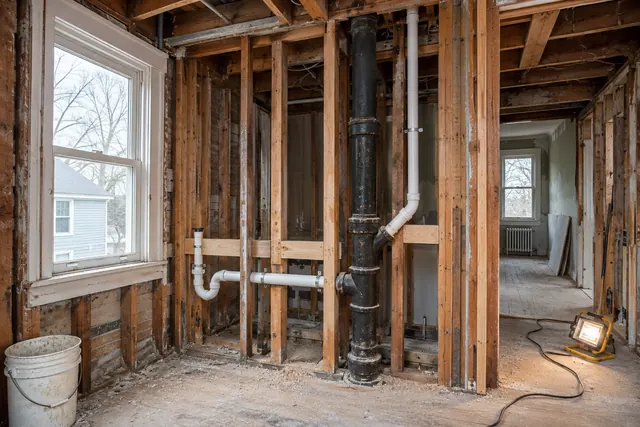 Plumbing Riser Diagram: What It Shows, Symbols and How to Read One
 Plumbing Layout: How to Design a Plumbing Plan for a House