Architectural designer: what they do and how they differ from an architect
An architectural designer is an architecture professional who plans and draws buildings but, in the usual US sense, has not passed the licensing exam and cannot use the title architect. Most work in a firm under a supervising architect. Others take on remodels, additions and small projects of their own.
- Topic
- Architecture
- Updated
- Reading time
- 12 min
- Studio
- Morales Arch & Design
In this article
- What is an architectural designer?
- What does an architectural designer do?
- Architectural designer vs architect
- Education, skills and career levels
- How an architectural designer becomes a licensed architect
- When to hire an architectural designer
- Architectural designer cost and salary
- How to choose an architectural designer
- Architectural designer FAQ
What is an architectural designer?
In plain US terms, an architectural designer is someone trained in architecture who has not passed the Architect Registration Examination (ARE). The work is real architectural work: concepts, floor plans, models, drawings. What is missing is the license, and with it the right to be called an architect. "Architect" is a legally protected title in much the way a doctor's is, and using it takes a set education, documented experience and exams.
The word designer covers more ground than people expect. It can mean a graduate on the way to a license, a senior employee who runs projects and never sat the exam, or an independent professional who designs additions and single rooms. Some licensed architects also describe themselves as architectural designers. Two people with the same words on a business card may therefore have quite different authority on a project.
Location adds another layer. The term is loose enough to mean different things in neighboring states, and some states restrict it by law. For many people it is also a career stage, the job title held before full qualification. Some stay at that stage by choice because the remaining route is long and expensive.
Building designer is a close relative. The label usually points to someone who works on houses and small commercial buildings, with training that ranges from a formal degree to none in architecture at all.
What does an architectural designer do?
Designers do most of their work in the early phases of a project: concept, space planning, first layouts and visualization. Many also draft construction documents, and in some practices technical detailing is the larger share of the job. The designer turns a brief into something that can be discussed, priced and, later, built.
The tasks below are common to designers and architects alike.
- Concept sketches, diagrams and presentation material
- Floor plans and space planning in CAD or BIM software
- 3D models, physical models and renderings
- Material research and the selection of finishes
- Coordination with structural engineers and with mechanical, electrical and plumbing (MEP) consultants
- Drawings and written specifications
- Work within site constraints and a budget limit
Visualization is often what clients remember, since it is the first time they see the building. If that is the part you need, it helps to know what goes into architectural 3D modeling before you ask for it.
Work does not have to stop when construction begins. Designers interpret the design intent for contractors, answer their questions, visit the site and review progress. They help coordinate trades and often look after finishing touches. The share of construction work is still smaller than an architect's, whose involvement typically runs from concept to completion.
Daily tasks depend on rank. A junior in a firm produces renderings and presentations, builds 3D models, picks up redlines and moves hand sketches into Revit. An employed designer with more experience may spend a single day updating schedules, checking code, drawing casework details and meeting product representatives.
Most designers are employees in a firm with a supervising architect. Independents take single rooms and additions directly from clients, or work as contractors who document projects for other firms.
Architectural designer vs architect
A capable designer's skills may barely differ from those of an emerging architect. The gaps that matter are the license, full command of local rules, required continuing education and the scope of duties during construction.
| Point | Architectural designer | Architect |
|---|---|---|
| Title | Generally not protected, though some states limit it | Legally protected |
| License | Often not required, depending on jurisdiction and project scale | Required |
| Education | Ranges from no formal architecture degree or an associate degree to a master's | Professional degree, usually BArch or MArch |
| Phases | Mainly concept, planning, visualization and drawings | All phases through construction administration |
| Typical scale | Remodels, additions, smaller residential and small commercial work | Residential, commercial and public projects of any size |
| Focus | Space, appearance, concept | Exterior, interior, structure and function together |
| Structure and regulation | May not make the final call | Responsible for decisions, with engineers involved |
| Continuing education | Expected in practice | Mandatory in most states |
In approach, the designer is usually the more conceptual of the two and the architect the more practical. Designers as a rule lack structural engineering training. Architects also specialize by building type because code needs change with use: getting a crowd out of a stadium is a different problem from the exits in a house. Architects may supervise construction as well, although on very large projects that role shrinks.

State title rules
The general position is that "architect" is protected and "architectural designer" is not. California is the exception to remember. Section 5536 of its Architects Practice Act makes it a misdemeanor to advertise as an architect or as an architectural designer without a license. In 2020 the statute set a fine of $100 to $5,000 and up to one year in county jail, and a board analyst read it as allowing an unlicensed person in California to use only the word "designer". Check your own state board before relying on a title, whether you are hiring or printing a business card.
Where the architectural engineer fits
A third role gets mixed up with these two. The architectural engineer handles the systems that keep a building standing and working: structure, electrical, plumbing and similar services, plus resistance to environmental forces. Designers and architects coordinate with engineers and do not replace them.
Education, skills and career levels
The typical route is a bachelor's degree in architecture, often followed by a master's. Some designers hold only an associate degree, which covers design theory, history and concepts. Building designers sometimes have no formal architecture training at all.
On software, employers expect AutoCAD, Revit and SketchUp, with ArchiCAD or Rhino in some offices and the Adobe suite for presentations. Talking clearly with clients and builders counts for as much as the design. Knowledge of codes, materials, structural systems and sustainability is basic, and the learning goes on through conferences, workshops and new software.
Titles differ from firm to firm, but responsibility grows along a recognizable line.
| Level | Experience | Usual responsibility |
|---|---|---|
| Junior designer | 0-3 years | Concept drawings, diagrams, renderings, models, BIM and CAD production, reading construction documents |
| Intermediate designer | 3-5+ years | All phases from concept to construction administration, coordination of clients, consultants and contractors, BIM, local codes, permitting agencies; a license is sometimes required |
| Senior designer | Varies by firm | Schedules, budgets, drawing sets and consultants, with a load comparable to a project architect or project manager |
For a post above entry level, firms commonly ask for three or more years after graduation. They look for teamwork and communication, then for working knowledge of approvals, detailing, materials and codes. A designer who can take a sketch through to a coordinated drawing set is worth more to an office than one who only produces images.
How an architectural designer becomes a licensed architect
A designer who wants the protected title needs three things: the education the state accepts, recorded experience and a passed exam. Experience is logged through the Architectural Experience Program (AXP). The exam is the ARE, run by the National Council of Architectural Registration Boards (NCARB). Every state board adds rules of its own, so the first step is the board's website in the state where you intend to practice.
The ARE has six divisions, which can be taken in any order.
- Practice Management
- Project Management
- Programming & Analysis
- Project Planning & Design
- Project Development & Documentation
- Construction & Evaluation
The list shows what separates the two roles better than any definition. Planning and design are one division. The rest deal with running a practice, managing a job, analyzing a program, documenting the building and seeing it built.
Obligations continue after registration. Most states require continuing education, counted in learning units over a one- or two-year cycle, and part of it must cover Health, Safety and Welfare topics. The American Institute of Architects (AIA) can track the hours, and boards may audit them. Designers are expected to keep learning too, only without that formal system.
When to hire an architectural designer
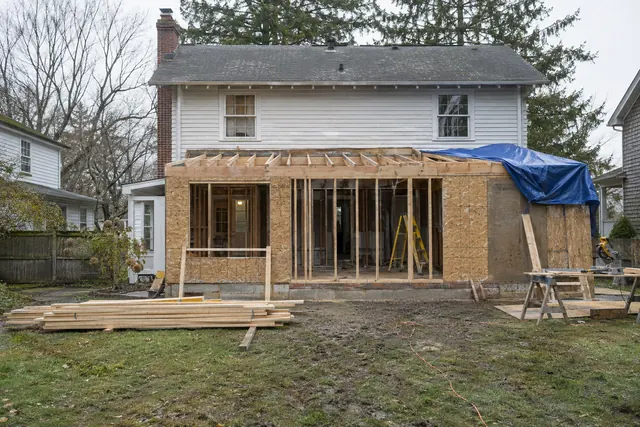
A designer is a sensible choice for small-scale work such as remodeling or adding to an existing house. A new building from the ground up calls for an architect. Between those points the answer depends on structure, use and what local rules demand.
| Project | Usual choice | Why |
|---|---|---|
| Single room or interior remodel | Designer | Mostly layout, finishes and drawings |
| Addition to an existing house | Designer, with engineering input as needed | Small scale, but structural questions come up |
| Small residential or small commercial project | Either | Depends on the jurisdiction and the structure |
| New house from scratch | Architect | All phases, full code responsibility |
| Public building or large commercial project | Architect, often with designers on the team | Complex codes, construction administration |
On large jobs the two roles work side by side. The designer develops concepts, plans and images while the architect holds the project together through documentation and construction.
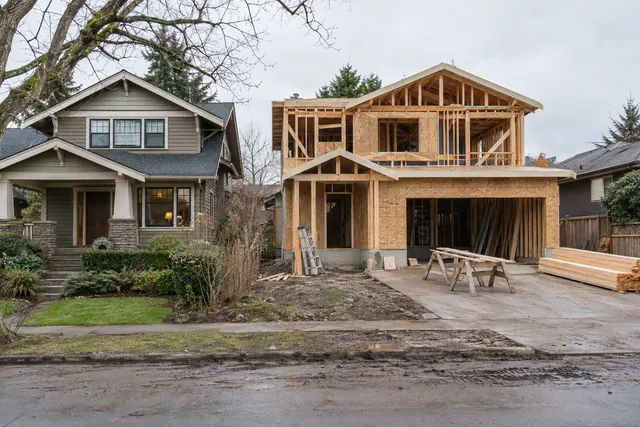
Look at your own situation before you compare names. If walls stay where they are, the designer route may be enough; the question of whether you need an architect at all turns on scale and local rules. For a full house, a residential architect is the closer fit.
Whether an unlicensed designer may prepare drawings for a particular permit depends on the state and the project. Ask the local building department before you sign a design contract.
Architectural designer cost and salary
An architect almost always costs more than a designer, and price is a common reason clients choose the designer. Fees and ability both vary widely among designers because nothing standardizes the title. Compare the scope before you compare the number.
US consumer cost guides put the cost of hiring an architect at roughly $2,100 to $8,400, with the actual fee set by the scope and the house. A fuller breakdown of fee types is in the guide to how much an architect costs.
The same gap shows in salaries. One US salary site lists an average of about $86,600 for architects against about $59,100 for architectural designers.
No single range describes designer pay, because the title runs from a new graduate to someone with more than ten years in practice. Firm size, specialty, location and experience all move the figure. Without a license the ceiling is usually lower than an architect's, even where the daily work looks similar.
How to choose an architectural designer
With an unprotected title, checking is your job. A few direct questions before the contract will show what you are paying for.
- License status. Ask whether the person is licensed, and in which state. Look the name up with the state board if the word architect is used, and in California also if the card says architectural designer.
- Scope. Get in writing whether the work stops at concept drawings or includes construction documents, consultant coordination, permitting and site visits.
- Who signs. If the jurisdiction requires a licensed professional, find out which architect or engineer takes responsibility and whether that fee is included.
- Engineering. Designers usually lack structural training. Ask who covers structure and MEP once a wall moves or a load changes.
- Relevant work. Look for projects of your type and size, with the drawings behind the pictures.
- Local rules. Ask how they handle codes and the permitting agency where your building stands.
- Construction phase. Agree who answers the contractor's questions and who checks progress.
Communication belongs on the list too. You will be describing a building that does not exist yet, and a designer who explains a plan clearly to you will usually do the same for the builder. Ask to see a full drawing set from an earlier job, since a set shows detailing skill that renderings hide.
If you are still deciding how much help to buy, compare the stages covered by typical architectural design services and mark the ones your project really needs. Someone with good drawings for the first stages may still need an architect for the last.
Architectural designer FAQ
What is the difference between an architect and an architectural designer?
An architect holds a professional license and may use a protected title. An architectural designer often has similar design training without the license, works more in concept and drawing phases, and has a narrower role in structure, regulation and construction.
Is architectural designer a protected title?
Usually not in the US, whereas architect is. State law can differ. California bars unlicensed people from advertising as an architectural designer and treats it as a misdemeanor.
Can an architectural designer work without a license?
Yes, in many places. Most do so inside a firm under a supervising architect, and others work independently on small projects. Whether a license is needed depends on the jurisdiction and the scale of the building.
When should I choose a designer over an architect?
Choose a designer for a remodel, a room or a modest addition. Choose an architect for a new building or anything with complex code requirements. A large project can use both.
Can a licensed architect be called an architectural designer?
Yes. Some licensed architects use the label, which is one reason to ask about the license directly and not to judge by the title.
Do all architectural designers have a degree in architecture?
No. Many hold a bachelor's or a master's in architecture. Some have an associate degree, and building designers may have little or no formal architecture education.
 Architectural 3D Modeling: Process, LOD and Software
 Do I Need an Architect for My House or Remodel?
 Residential Architect: What They Do, What They Cost and How to Hire One