Furniture Design Services: How Custom Furniture Gets Designed and Built
Furniture design services cover everything between an idea for a piece and the finished object in your room: the brief, sketches and 3D renderings, shop drawings, approval, the build and delivery. Design time and making time are priced separately, and a typical custom commission in the US takes 14 to 20 weeks.
- Topic
- Furniture design
- Updated
- Reading time
- 12 min
- Studio
- Morales Arch & Design
In this article
- What furniture design services include
- When custom furniture design is worth it
- The furniture design process, step by step
- How to prepare a furniture design brief
- How much furniture design services cost
- Materials and finishes
- How long custom furniture takes
- Choosing a furniture designer or maker and reading the quote
- Common mistakes with custom furniture
- Furniture design services FAQ
What furniture design services include
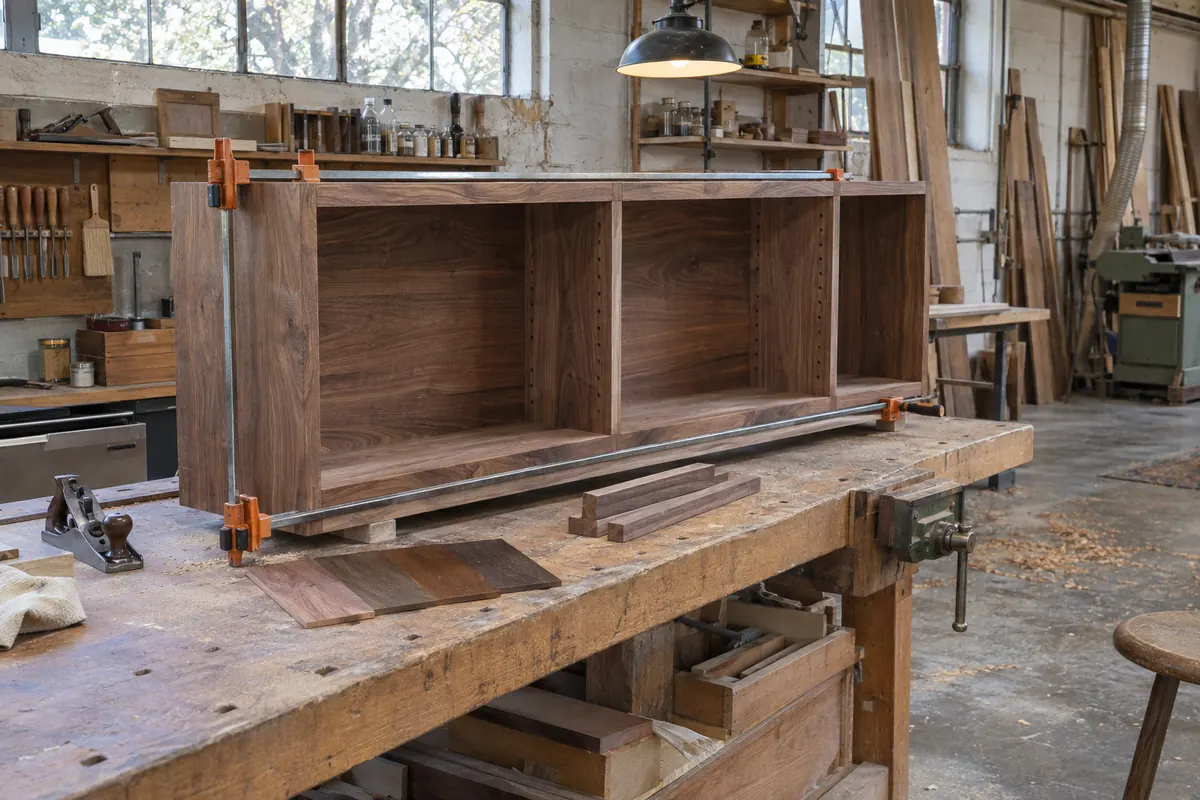
A furniture design service turns a need into a piece that can be built. In practice that means listening to how you will use the piece, sketching options, producing drawings or 3D renderings, pricing them, revising, and then handing a signed-off design to the workshop. Many independent makers design and build under one roof. Others design only and coordinate the build with a cabinetmaker or upholsterer.
The phrase covers three quite different offers, and it helps to know which one you are looking at:
- Custom furniture workshops and designer-makers. They design a one-off piece for your space and make it themselves. Design time is billed, the piece is priced individually, and the result is a true commission.
- Interior design studios. A designer plans the room, specifies furniture and may draw custom pieces, then manages the maker, the details and the logistics. Our guide on what an interior designer does explains that role in more depth.
- Retailer design desks. Furniture stores offer design help that works from their own catalog. It suits a room furnished from stock pieces, not a piece made to measure.
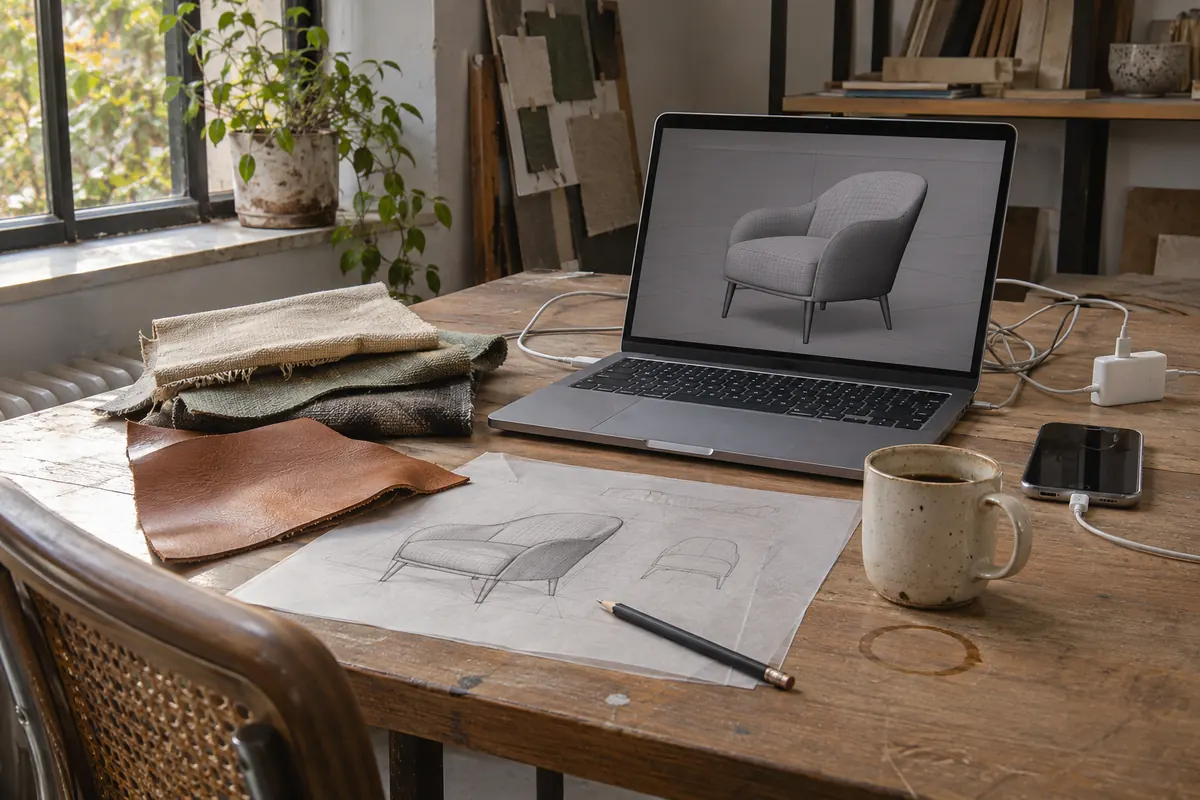
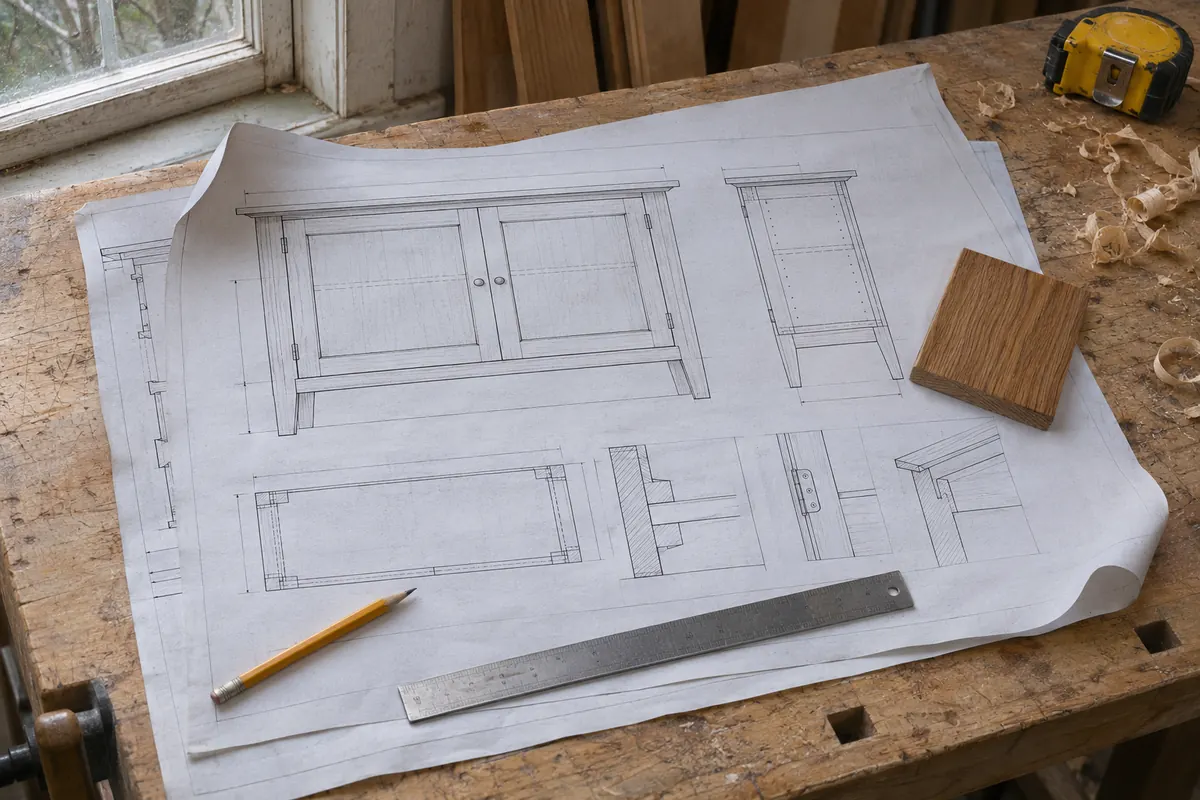
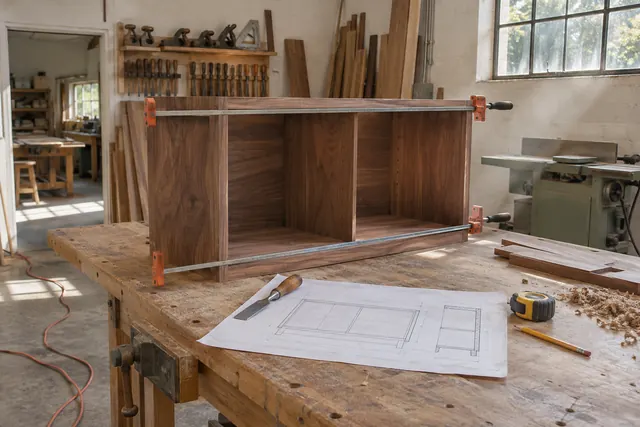
Whoever you hire, the deliverables are similar: a brief, concept sketches, renderings or a mock-up, shop drawings, a costed estimate and a build schedule. Shop drawings matter most. The same set is used for your approval and for the actual fabrication, so anything missing from them tends to be missing from the piece. For what a good set looks like, see furniture detail drawings.
When custom furniture design is worth it
Start with an honest check: can you buy something close enough from a store? If you can, it will be cheaper and arrive sooner. Custom work earns its cost when retail options run out, usually because the space is awkward, the storage need is specific, or the size simply does not exist.
The pieces people commission most often show where that happens:
- Alcove shelving, corner units and bookcases under sloping ceilings, where standard carcasses leave dead gaps.
- Media units and console tables built to hide cables and equipment.
- Wardrobes, especially floor-to-ceiling units that use every inch of height, followed by bedside tables and chests of drawers to match.
- Built-in banquettes and upholstered seating sized to a particular wall or seat count.
Ergonomics is another reason. A maker can set heights and reaches to your body and habits, down to which hand you use. A useful rule for bedrooms: covering every wall in joinery makes a room feel heavy, so leave some walls open.
The first decision is whether the piece is freestanding or built-in. A freestanding piece can follow your preferred proportions. A built-in takes its size from the space, which is why it needs accurate site measurements before anything is drawn. If you are still deciding on style and type, our article on furniture design covers the basics.
The furniture design process, step by step
Workshops describe the sequence in slightly different words, but the order is consistent.
- Initial consultation. Often free at the workshop, by phone or video. A visit to your home is usually charged. Expect the first briefing conversation to take an hour or more.
- Ballpark estimate. From a basic outline the maker can give a rough cost and timeframe. A final price only comes once the design and build plan are complete.
- Design and revisions. You receive a few sketches, often with several cost variations, or first 3D renderings. A second meeting refines the direction with material samples. Some workshops include up to two draft rounds with edits, each with a renderings set and a cost breakdown by materials and complexity.
- Field measurement. For any built-in, a professional measure of the site before final drawings is strongly recommended.
- Shop drawings and approval. Final drawings, fabric and finish selections and the field measure are approved together.
- Contract and build deposit. A signed scope of work and a deposit put the job into the build schedule.
- Production. The maker updates you and may ask about specific details as the piece takes shape.
- Delivery and installation. The balance is paid and the piece is delivered, fitted or collected from the workshop.
Designs can be presented as hand sketches, watercolors, computer renderings or physical models. Renderings and models cost more to produce, but they bring problems to light before the piece is built rather than after it arrives. Many clients cannot read 2D drawings well, so a mock-up or 3D view before sign-off is money well spent. 3D modeling is the usual way to get there for built-ins and larger pieces.
The design consultation is often the longest stage of the whole job. Where your intent is vague, the maker fills the gaps with guesses, and those guesses take more rounds to correct.
How to prepare a furniture design brief
A good brief shortens the design stage and makes the first proposal closer to what you want. It should be clear about needs without prescribing every detail, so the maker still has room to bring ideas. Cover these points:
- Function. What the piece does, what it must store, how many people it seats, who uses it.
- Size and position. Ideal dimensions and where it sits in the room.
- Measurements. Measure the area and the surroundings, not only the space for the piece: baseboards, outlets, windows, door swings, ceiling slopes. Double-check the numbers and add photos.
- Ergonomics. Your height and handedness, and how you reach and sit.
- Style references. Inspiration images and a rough sketch, however crude. Both speed up the outline proposal.
- A sample board. Put fabric next to the wood or metal finish and the wall color to judge the whole look before the first appointment.
- Budget. State it at the first meeting, with needs listed in order of priority.
Inspiration photos are a common starting point. What makes the result custom is your input on size, seat count, fabric and color. A good designer will question the brief, because what looks essential at the start is often not what the room needs.
How much furniture design services cost
Expect two lines on the bill: design and making. Design time is real work and should be paid properly. Talk about budget at the very start. Scaling a finished design up or down afterwards rarely gives a good result.
| Item | Typical figure | Notes |
|---|---|---|
| Design hourly rate (US workshops) | $135 to $150 per hour | Billed on top of the build price |
| Design deposit | About 3 to 4 hours of design time | Covers first renderings and revisions |
| Initial design fee (US workshop) | $175 | Credited to the final price if the project goes ahead |
| Custom piece vs retail equivalent | About 2 to 3 times the price | US manufacturer estimate |
| Typical commission | $1,000 to $10,000 | Depends on complexity, finishes, functions, hardware |
| Average custom furniture project (US) | About $2,600, most between $1,000 and $4,250 | Simple pieces sit at the low end |
Makers charge either by the hour or by size, and many set a price per piece that reflects the joinery, carving or inlay involved. What moves the number most:
- Complexity and functions. Mechanisms, drawers, lighting and specialist hardware add hours.
- Upholstery. A banquette priced at $2,000 can reach $3,000 depending on the fabric or leather.
- Wood species. It changes the price noticeably, yet timber is still a small share of the total bill. Downgrading the material to save money is usually a false economy.
- Installation. Include delivery and fitting in the budget from the start.
Bespoke work runs on thin margins, typically 10 to 20 percent, which is why makers price changes carefully. A complex piece with moving parts is effectively a prototype, so set aside a contingency for testing and adjustment.
Materials and finishes
Choose materials by use first. Spots that take heavy wear, such as dining tables, hall benches and kitchen seating, need hard-wearing, stain-resistant finishes. Light or muted natural woods keep a large piece from looking heavy and can be painted later if your taste changes.
Construction quality is where custom work should pull ahead of mass-market furniture. Retail fast furniture tends to use softer, cheaper woods. A custom maker should build in hardwoods and, for upholstery, use commercial-grade springs and foam. Ask what the frame, joints, springs and cushion cores are made of, and see samples next to each other before you approve the finish.
How long custom furniture takes
Lead time has three parts: design, fabrication and delivery. Each depends on the shop's queue and the complexity of the piece.
| Stage | Typical example |
|---|---|
| Shop drawings after consultation and deposit | 3 to 5 weeks |
| Fabrication after drawings, fabric and field measure are approved | 8 to 10 weeks |
| Whole project, start to finish (US workshop) | 14 to 20 weeks |
| Complex commissions | Up to a year |
Two things shorten the wait. Arrive with the design direction settled, so the consultation does not drag. And pay the build deposit promptly once the design is approved, because in many workshops that deposit is what reserves the next available slot.
Choosing a furniture designer or maker and reading the quote
Look at work you already like, in magazines, at craft fairs or by meeting makers in person, then pick someone whose known style matches yours. A maker who has built similar pieces will need fewer rounds to get yours right. Many will work remotely on a case-by-case basis, and some ship nationally or internationally through fine-art shippers with white-glove installation.
For larger projects, an experienced interior designer can handle details and logistics and should brief you before you meet the maker. If the furniture is part of a wider fit-out, such as a new kitchen design, it makes sense to bring the furniture into that plan early.
Get at least three detailed written quotes and compare materials, process, timeline and what is included. A sound quote or contract states:
- specifications and materials;
- the total price and the payment schedule;
- the completion or delivery date, with a promise to notify you early about delays;
- warranty terms;
- how changes are handled and charged.
Payment terms follow a common pattern. Small jobs usually take a 50% deposit, and larger ones a deposit plus stage payments. The build deposit, often 50% against a signed scope of work, pays for initial materials and is frequently non-refundable. The balance is due on delivery.
Most makers are happy for you to visit the workshop while your piece is being built. It is a good moment to check proportions and details before the finish goes on.
Common mistakes with custom furniture
- Signing off a design you do not fully understand. Many clients approve drawings they cannot really read. Ask for an explanation, a 3D view or a mock-up first.
- Changing things once making has started. Late changes cost heavily in time and material, and with margins of 10 to 20 percent a single change can wipe out the maker's profit, so it will be charged.
- Leaving the budget conversation until later. A design reworked to hit a price is never as good as one drawn for it.
- Skipping the field measure. Built-ins drawn from rough numbers rarely fit.
- Forgetting access. Check that doors, hallways, stairs and elevators can take the piece. Large items can be built in sections and joined on site, but that has to be planned in the drawings.
- Expecting retail perfection from a one-off. A bespoke piece is a prototype and may need adjustment, especially if it has mechanisms.
Before delivery day, clear the route, confirm whether the price includes installation or workshop pickup, and make sure the space is ready for fitting.
Furniture design services FAQ
Should I buy from a retailer instead?
If a store sells something close to what you need, yes: it will cost less and arrive sooner. Custom design makes sense when the size, storage or fit you need is not available.
How much does custom furniture design cost?
US workshops bill design at around $135 to $150 an hour, and the piece itself often lands between $1,000 and $10,000, roughly 2 to 3 times a comparable retail item. Complexity, materials, upholstery and hardware set the final figure.
Is the design deposit refundable?
Usually not. Some workshops credit an initial design fee to the final price if you go ahead, and build deposits are typically non-refundable once the job is scheduled. Check the terms in writing.
How long does custom furniture take?
A typical US example is 14 to 20 weeks from first meeting to delivery: a few weeks for shop drawings, 8 to 10 weeks of fabrication, then delivery. Complex commissions can take up to a year.
Do I need an interior designer?
Not for a single piece from a designer-maker. For a whole room or several built-ins, an experienced designer can manage the details, the maker and the logistics.
Can the maker work remotely or ship to me?
Many can. Consultations often run by phone or video, and some workshops ship domestically and internationally with white-glove installation. Others offer pickup from the workshop.
What should a furniture quote include?
Specifications, materials, total price, payment schedule, completion date, warranty and the rules for changes. Compare at least three quotes on those points.
Who pays for changes after the build starts?
You do. Changes once manufacturing has begun cost the maker time and materials, and contracts normally set out how they are priced.
 What does an interior designer do: duties, process and cost
 Furniture Detail Drawings: Views, Joinery and What the Shop Needs
 Article furniture design: the brand, the process and what a furniture designer checks