Japandi Interior: How to Put the Style Together Room by Room
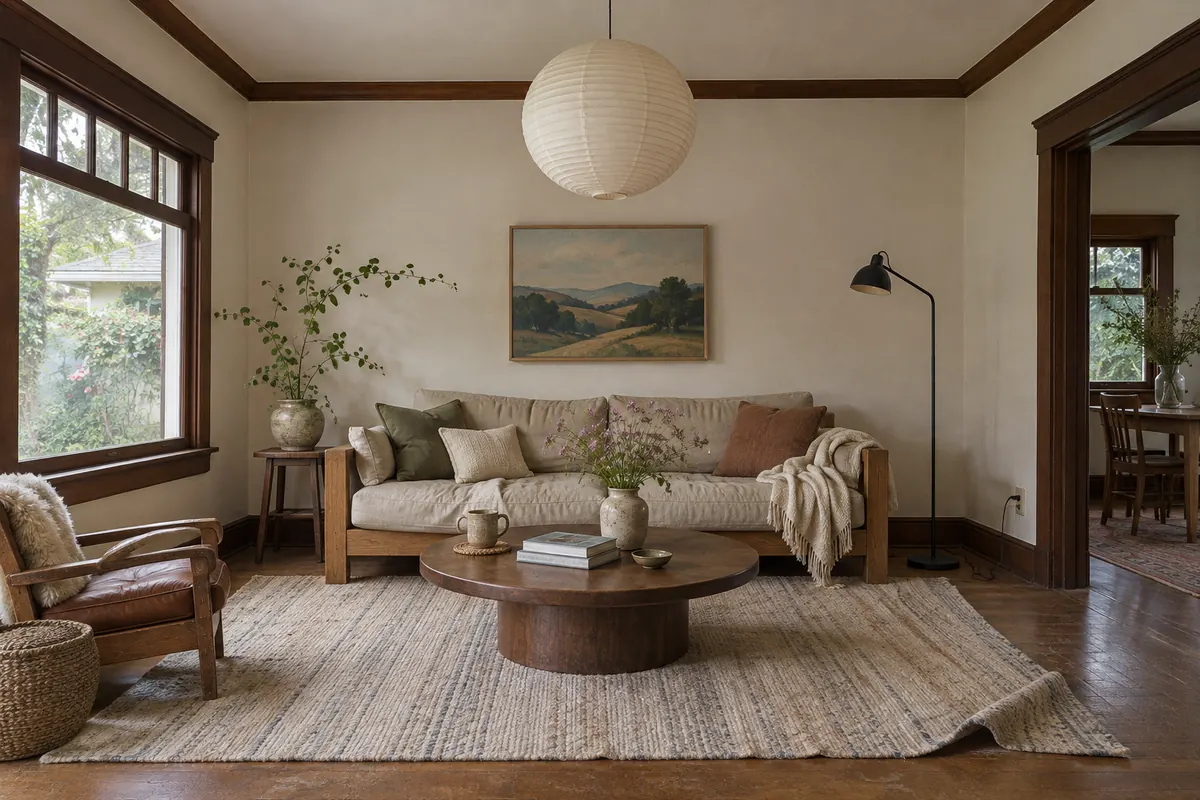
A Japandi interior combines Japanese minimalism with Scandinavian coziness: warm neutrals, natural wood, low simple furniture and a small number of well-made objects. The room is kept spare, then softened with linen, wool and warm light so people want to sit down in it.
- Topic
- Interior styles
- Updated
- Reading time
- 12 min
- Studio
- Morales Arch & Design
In this article
- What a Japandi interior is and where it comes from
- Core principles of Japandi interior design
- Japandi color palette
- Materials and textures
- Furniture for a Japandi home
- Lighting, plants and decor
- Japandi interiors room by room
- How to get the Japandi look, including on a budget
- Common mistakes in Japandi rooms
- Japandi interior FAQ
What a Japandi interior is and where it comes from
The word joins "Japanese" and "Scandi". In practice the style takes the calm, edited look of modern Japanese design and adds the comfort people associate with Scandinavian homes. The two traditions had plenty in common before anyone gave the mix a name. Both respect natural materials and good craftsmanship, and both prefer simple forms.
The connection goes back about 150 years. When Japan reopened to foreign travelers, Scandinavian designers saw its craft up close and admired how simple it was.
Two ideas still sit underneath the look:
- Hygge is the Danish idea of comfort, the home as a cozy sanctuary. It is often described through ten principles, among them atmosphere, presence, comfort and togetherness. Around the house it comes down to plants, secondhand pieces, soft textures and warm neutrals.
- Wabi-sabi is the Japanese appreciation of imperfection. Wabi is the charm of simple things, sabi the beauty that time leaves on them. Seven Zen principles are linked with it: kanso, kokou, shizen, datsuzoku, seijaku, yugen and fukinsei.
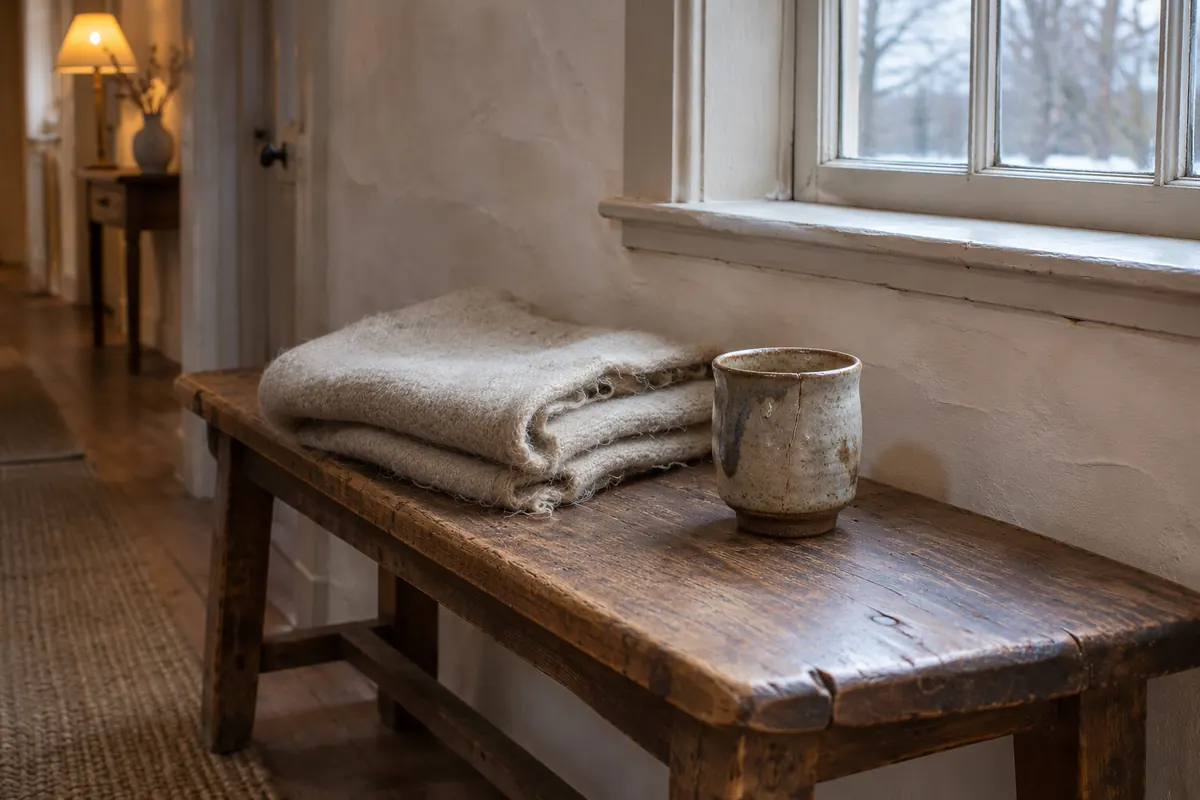
You can see wabi-sabi in a cracked ceramic vase kept on display, a roughly finished table, raw unpolished wood with its knots showing, or an arrangement left deliberately asymmetrical. Reused and upcycled furniture belongs here too, as does plain decluttering.
The popularity is easy to explain. The style suits slow living and mindful design, pays attention to what things are made of, and treats emotional comfort as part of the job. If you want to see the northern half of the mix on its own, compare it with a straightforward Scandinavian interior.
Core principles of Japandi interior design
Intentional simplicity is the main rule. Every object should be useful or mean something to you; nothing is bought to fill an empty surface. The minimalism follows how you live. A person who reads every evening needs a good chair and a lamp more than another side table, so the chair and lamp stay and the table goes.
Ten elements come up again and again in rooms that work:
| Element | How it shows in the room |
|---|---|
| Minimalism | Clear surfaces, few pieces, open floor between them |
| Natural materials | Wood, bamboo, rattan, linen, stone, ceramics |
| Neutral palette | Warm whites, beige, taupe, soft gray |
| Functional furniture | Built-in drawers, modular seating, storage that looks good |
| Wabi-sabi | Visible grain, raw finishes, asymmetry |
| Craftsmanship | Handmade, durable pieces in place of disposable ones |
| Contrasting textures | Soft linen next to rough natural wood |
| Subtle color | A muted blue pillow, a sage green vase |
| Light and air | Large windows, bright walls, simple window treatments |
| Plants | Bonsai, bamboo and other greenery treated as part of the design |
If you only have the energy for three of them, take minimalism, natural light and natural materials. They carry most of the effect and the rest can be added slowly.
Balance matters as much as reduction. A bare wooden sofa can make a room look cold, as if nobody lives there. Add a warm textured throw and some cushions, and the same sofa looks ready for an evening at home.
Japandi color palette
Start with a neutral base that leans warm: warm white, cream, beige, sand, oatmeal, taupe, greige or stone. A warm off-white is less stark than bright white. Soft gray and soft blue can come in to cool the mix slightly. Light colors reflect daylight, so the room reads brighter and more open.
Then add depth. Dark shades ground the pale base and can appear on a wall, interior doors, furniture or kitchen cabinets. Deep brown belongs in this group. Black and charcoal are better kept for small parts such as a lamp frame, a picture frame, table legs or a single chair, where they define the space or draw the eye to an architectural detail.
| Layer | Colors | Where to use it |
|---|---|---|
| Base | Warm white, cream, beige, sand, oatmeal, taupe, greige, stone | Walls, large upholstery, bedding, curtains |
| Wood | Light oak or ash for brightness, walnut and other dark woods for depth | Furniture, cabinetry, tables |
| Dark contrast | Deep brown, charcoal, black | Doors, a wall, cabinets; black mostly in thin details |
| Muted accents | Sage to olive green, soft or slate blue, dusky pink, gray | Cushions, throws, vases and other decor |
| Stronger accents, optional | Ochre, terracotta, denim, teal | One or two small items |
Opinions differ on how far accents may go. The stricter reading stops at muted green, soft blue, pale pink and gray. A looser one welcomes ochre, terracotta and deeper blues up to teal. Proportion settles the argument in either case, since accents never take over from the neutral base. Patterns and bright colors are best left out.
Materials and textures
Wood does most of the work. Light Scandinavian species such as ash, oak and birch keep the room bright, while a darker wood in the Japanese manner, usually walnut, gives it layers. Mix the two on purpose. Leave the grain bare or use a light finish, and let knots and small flaws show. Wood can go overhead as well, on ceiling beams.
- Bamboo suits blinds, frames, furniture, lampshades, storage boxes and woven plant baskets. Its pale color and fine texture contrast with sturdier oak.
- Rattan belongs in one or two items, such as a basket, a lampshade or a chair detail. Beyond that the room starts to look themed.
- Linen, cotton and wool cover curtains, cushions, bedding, dining chairs and rugs.
- Stone and handmade ceramics bring a grounded variation, in countertops, basins and the pieces on open shelves.
- Washi paper, used for shoji screens and lampshades, diffuses light softly.
Put hard and soft textures side by side. A soft linen throw against a rough wood coffee table is the classic pairing; a wood table with a fabric sofa, linen cushions and a wool rug does the same on a larger scale. Use textiles where they serve a purpose. Layering one on every surface undoes the calm.
Handcraft is worth seeking out. A braided rug from a local craft fair or a coffee table that keeps the natural shape of the wood gives the room character.
Furniture for a Japandi home
Less is more here, so buy fewer pieces and better ones. Handmade furniture of real quality fits the idea far more closely than something cheap and disposable. Shapes are clean, and they sit low.
- Sofa: low profile, wood frame, plain cushions. A modular version that can be rearranged also fits.
- Armchair: a Scandinavian design in oak or another light wood.
- Tables: clean lines or organic outlines. Coffee tables with drawers or built-in compartments are useful because the top stays clear.
- Storage: low cabinets, closed shelving and storage benches, plus a few curated open shelves. Good storage doubles as decor. Match the size of the unit to the room.
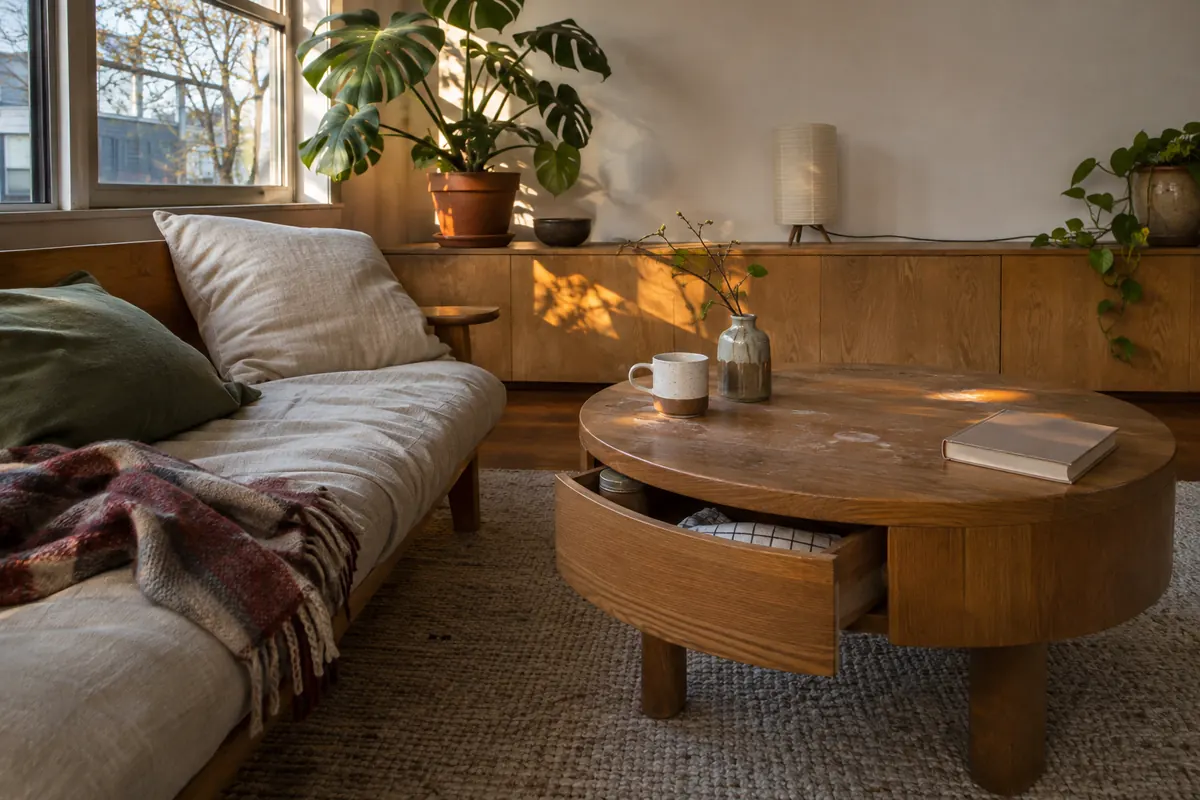
Set straight lines against curves. A straight sofa gains from a round coffee table or a floor lamp with a curved stem.
Placement counts too. Keep the main walking paths free, leave air around the key pieces and skip anything too big for the space. Because the style depends on clear floor and few objects, it does not need a large room.
Lighting, plants and decor
Daylight comes first. Walls are white or light, and windows are often left bare or dressed with something simple so indoors and outdoors run together. A mirror on a wall that gets sun pushes the light further.
Where daylight runs short, choose bulbs with a warm, yellow-orange glow and avoid bright white ones. Several lamps at different heights lay overlapping shapes of light on the walls. Paper shades soften the beam, and on winter nights candles finish the job.
Plants count as an integral part of the room. Bonsai and bamboo are the obvious choices, though any green potted plant will do. If yours tend to die, stand branches in a clay pot or lay a piece of driftwood on the tabletop. Both are free.
With decor, restraint in number is what people notice. One good sculptural object beats many. Handmade ceramics, lamps and books earn their place because they are used as well as looked at.
Japandi interiors room by room
Living room
Choose one comfortable sofa over several oversized seats, add a practical coffee table and closed storage for everyday things. Low pieces in light oak or ash, linen and cotton upholstery, an area rug, handcrafted ceramics and a generous number of potted plants make up the rest. A loveseat can join the sofa in a bigger room as long as plenty of open space stays between them.
Bedroom
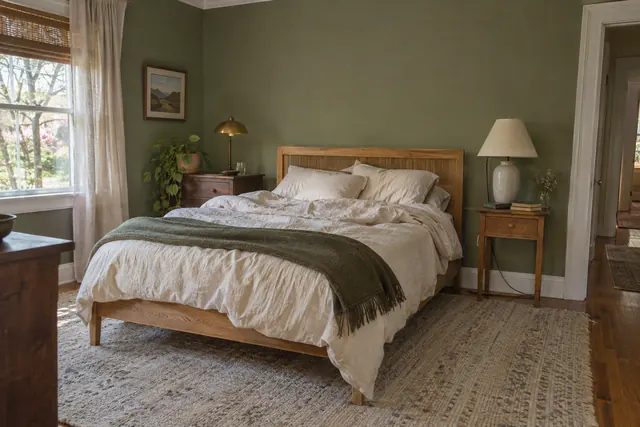
A low platform bed with layered linen bedding sets the tone. Keep the colors warm and neutral, the decor minimal, and let negative space do its work around the bed. For other directions to weigh against this one, look through our bedroom style ideas.
Kitchen
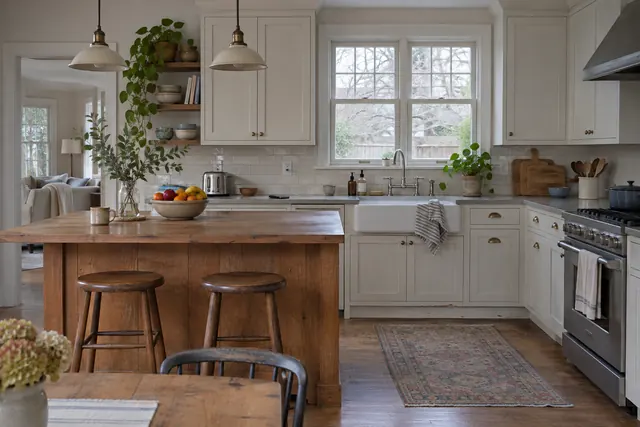
Light wood cabinetry, stone or matte countertops, minimal hardware and integrated storage are the core. Open shelves hold a few selected objects, handmade ceramics for instance. Dark cabinets are an option when the room needs contrast. Layout questions come before finishes, and they are covered in the guide to kitchen design.
Bathroom
Aim for a spa mood: a stone basin, a wood vanity, a soft neutral palette and diffused light. Very few accessories stay out on show.
Dining area
A compact, comfortable table and chairs are enough, with linen-covered seats and an understated look overall.
How to get the Japandi look, including on a budget
- Declutter. Clear the surfaces and keep what you need. Put bright and patterned things away first.
- Fix the base. Go for warm off-white or another pale neutral on the walls, and free up the windows.
- Choose the key pieces. Buy a quality sofa, table and storage unit for the way you use the room, and place them with clear walkways.
- Mix the woods. Set light oak, ash or birch against one or two darker items.
- Add softness. A wool rug, a linen throw and some cushions are usually enough to warm the room.
- Layer the light. Use warm bulbs at several heights, with a paper or bamboo shade among them.
- Finish with a little. Plants, a handmade ceramic, one black detail and a muted accent color.
On a limited budget, secondhand is the most faithful route, since both hygge and wabi-sabi welcome used and upcycled things. Thrifted furniture can be refreshed. In the US, HomeGoods and Homesense are workable places to find durable starter pieces.
In a small room, pick light wood over dark finishes and make the most of daylight so it feels larger. Renters have an easy start as well, since apartments are already laid out to be functional.
Common mistakes in Japandi rooms
- Furnishing only from IKEA. The cheaper pieces read as a recognizable mass-market look. Buy the quality staples elsewhere and use IKEA for accessories.
- Going too bare. Without warm textiles and soft light the minimalism turns cold.
- Overdoing rattan and bamboo. The room becomes a theme set.
- Covering every surface in textiles. Coziness needs a few layers in the right places.
- Letting accents grow. Once color competes with the neutral base, the balance is gone.
- Buying oversized furniture. Blocked walkways spoil the open feel.
- Filling empty space. Objects with no use or meaning are exactly what the style removes.
- Using bright white bulbs. They work against the warmth of the wood and the paint.
Japandi interior FAQ
What is Japandi style?
It is a blend of Japanese minimalism and Scandinavian hygge. Rooms have few objects, natural materials, neutral color and a soft, comfortable finish.
What colors are typical in Japandi?
Warm white, cream, beige, sand, taupe and soft gray form the base. Muted olive, sage, soft blue and dusky pink serve as accents, with deep brown, charcoal and black for contrast.
Which materials work in Japandi?
Natural wood from pale ash and oak to walnut, bamboo, rattan, stone, handmade ceramics, linen, cotton, wool and paper.
What is the difference between Japandi and Scandinavian style?
The Scandinavian side supplies pale oak, brightness and hygge comfort. Japandi adds darker wood such as walnut, the wabi-sabi taste for imperfection and asymmetry, and Japanese minimalism.
How do I make a small living room Japandi?
Use light-colored wood, let in as much daylight as possible and limit yourself to one comfortable sofa that fits the room. Keep walkways clear and everyday items in closed storage.
Can I do Japandi on a budget?
Yes. Declutter first, shop secondhand, refresh thrifted pieces and decorate with branches or driftwood. Save the larger spend for staples you use daily and keep IKEA for accessories.
 Scandinavian interior: how the style works, room by room
 Bedroom style ideas: 12 looks, from modern to boho
 Kitchen Design: A Practical Guide to Designing the Kitchen