Virtual Interior Design: Online Services, Costs and Room Planners
Virtual interior design is the design of a room at a distance: you send photos, measurements and a budget, and a designer returns a concept, a layout and a shopping list that you carry out yourself. Published US packages run from about $99 to $1,549 per room, and free room planners cover the do-it-yourself end.
- Topic
- Working remotely
- Updated
- Reading time
- 11 min
- Studio
- Morales Arch & Design
In this article
- What virtual interior design means
- Virtual interior decorating options: package, consultation or app
- How an online interior design project works
- What virtual interior design costs in the USA
- Free virtual room design tools and apps
- Advantages and limits compared with in-person design
- How to choose an online interior designer
- How to prepare for a virtual design consultation
- Virtual interior design FAQ
What virtual interior design means
The term covers three different products, and the difference decides what you pay for. The first is a remote service: a professional sees your home through photos and video, talks through your goals and then guides you while you do the work. It sits between decorating on your own and hiring a traditional designer who comes to the house.
The second is software. In a 3D room planner you upload a photo of the room, place furniture and decor, and change colors or lighting until the picture looks right. You are the designer, and the program only shows the outcome.
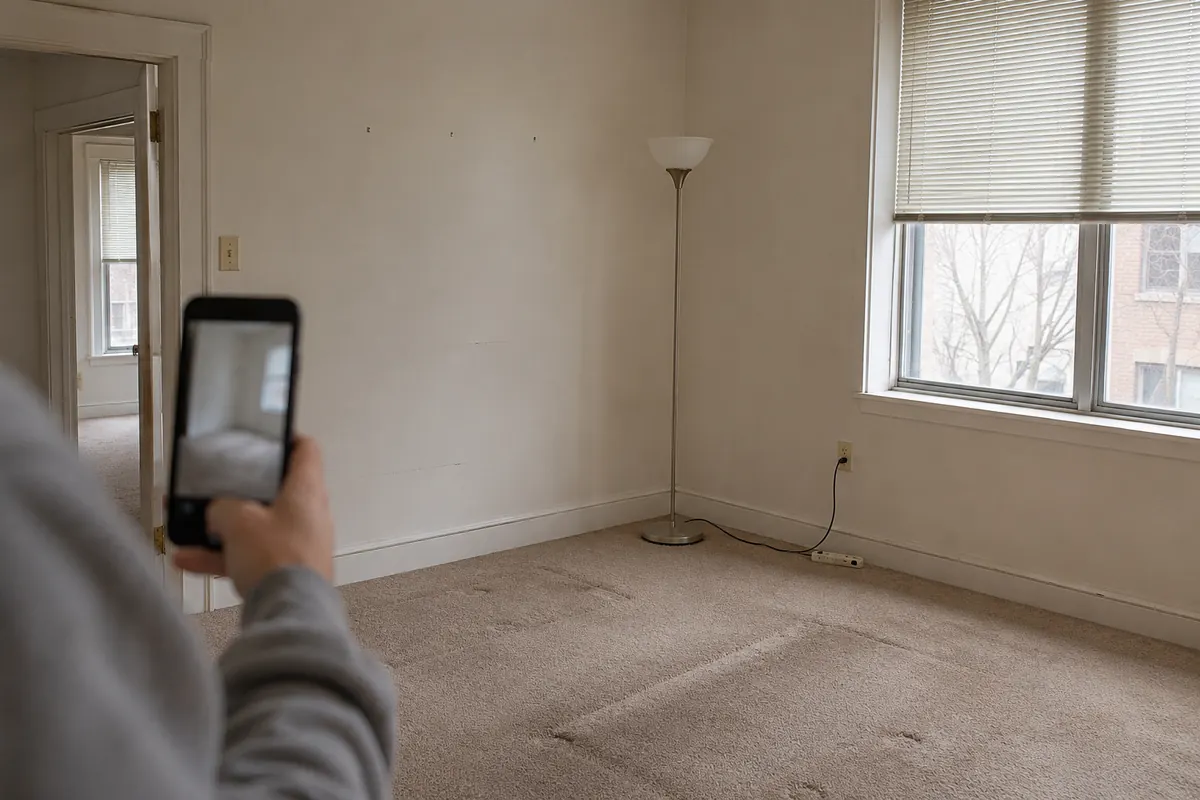
The third is virtual staging. Images, 3D modeling and AI are combined to show furnishings before anything is moved, or a photo of a real room is edited to add or take out a rug, a table or a whole furniture set. Sellers use it for online listings. It saves the cost of a stager and of furniture rental, which can come to thousands of dollars, and nobody has to carry a sofa. A staged picture is a presentation, though. It does not come with a plan for how you will live in the room.
Many designers offered remote work before 2020. The pandemic pushed demand for contact-free consultations, and people got used to both designing and shopping for a home through a screen.
Virtual interior decorating options: package, consultation or app
A per-room package suits someone who wants the entire room resolved, down to the items to order. An online interior design consultation is bought by the hour and solves a narrower problem. You should come off the call with enough information to carry on alone.
| Format | What you receive | Best use |
|---|---|---|
| Design package | Concepts, final layout, shopping list, revisions; 3D views in higher tiers | Furnishing or restyling a full room |
| Hourly video session | Advice and next steps for your own work | Layout questions, a stuck project |
| Color consultation | Paint choices based on photos and video | Repainting with the furniture you own |
| Organizing session | Coaching through sorting and storage | Cluttered rooms and closets |
| Kitchen or bath design | Rendered redesign and a punch list of things to buy | Remodeling before you call an installer |
| App or room planner | Your own saved 2D or 3D design | Trying ideas at no cost |
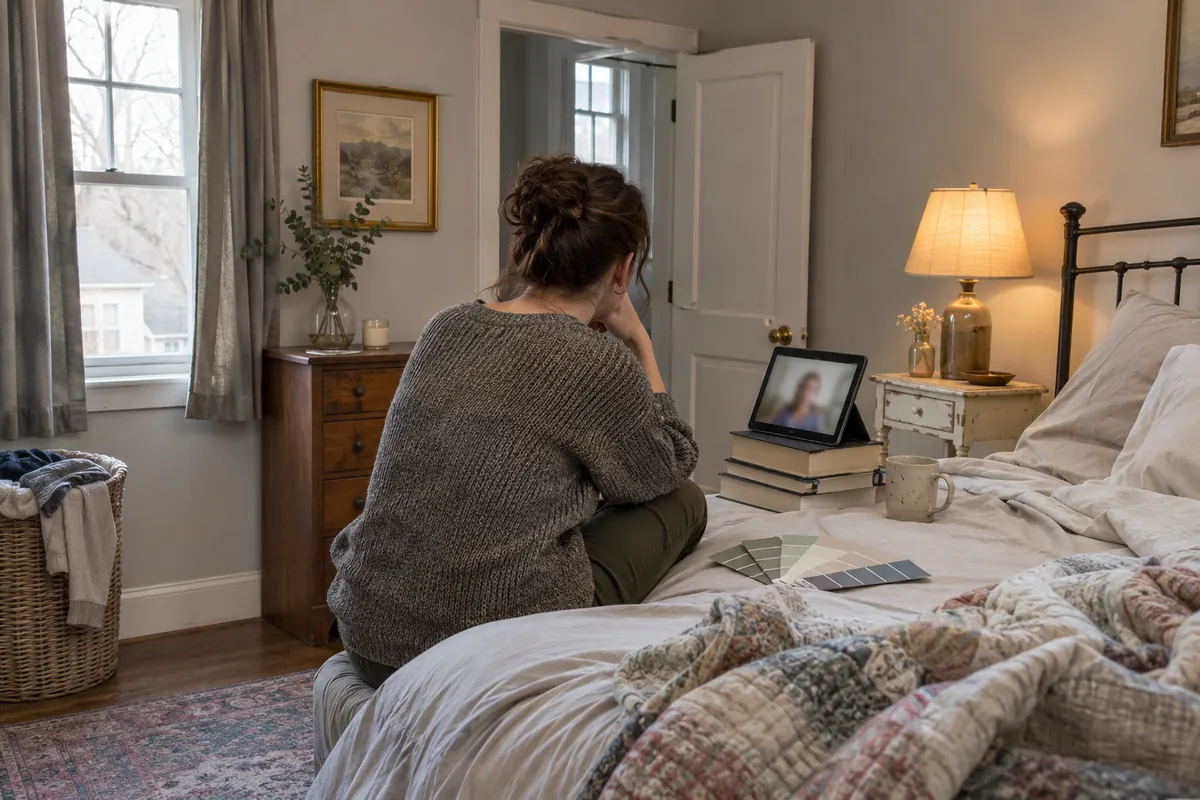
The formats combine well. You can draft two or three arrangements in a planner, then pay a professional for an hour to pick them apart. If you plan to do most of it yourself, start with how to decorate a room online.
How an online interior design project works
Services differ in the interface, while the sequence stays close to this one:
- Style quiz and brief. You click through room images to find your taste, then describe size, layout, budget and goals.
- Photos and measurements. You upload both; everything after this depends on them.
- Designer match. Some platforms assign one person. On others you choose two from a matched list and get competing proposals.
- Concept. Mood boards, colors and furniture ideas arrive, often within days. Where two designers compete, each may send two concepts.
- Revisions. You comment by chat or phone. The number of rounds is set by the package, from three to unlimited.
- Final design. A layout or floor plan, a shopping list and, if the tier includes it, a 3D render.
- Implementation. You order and install, with remote support from the designer.
Expect questions about how the room is used and by how many people, whether there are children or pets, what you can spend and which pieces stay. A good designer keeps usable furniture and proposes new items only where there is a gap. The job overlaps with what an interior designer does in person, minus the site visits.
Online projects usually finish in six weeks or less, against months or even years for a traditional commission. Read the small print on pauses: one US platform closes a project automatically after 90 days without activity.
What virtual interior design costs in the USA
Fees are either flat per room or hourly, and the flat fee is usually one all-in price paid upfront.
| Package type (USA) | Price | Included |
|---|---|---|
| Budget, basic tier | About $99 per room | One concept board, three revisions, final board with up to 10 shoppable items, chat |
| Budget, full tier | About $159 per room | Two concepts, unlimited revisions, floor plan without 3D, up to 50 items, one phone call |
| Budget service with in-person work | About $499 first room, $199 each extra | Visit by a designer |
| 3D service, living room | $699, $849 or $1,549 | Floor plan, 3D render, shopping list, unlimited revisions; a more experienced designer in higher tiers |
| 3D service, smallest space | From $549, even for a hallway | Same service at its minimum price |
| Sample box by mail | $695 for one room, $1,195 double, $250 per extra box | Physical swatches, paint chips and samples in place of renders |
One 3D service sells an optional home visit for $350, in selected US cities only. Tier price mainly buys designer experience, the number of concepts and the type of visuals. When the images matter most, compare the package with a separate rendering price.
Hourly consultations, 2020 rates
- Designer found through online bidding: about $75 per hour
- Organizer: about $120 per hour
- Kitchen or bath designer: $175 per hour
- Color consultant: $200 to $400 per hour
- Boutique interior designer: $300 for a session of one to two hours
Free consultations also exist at furniture chains, home improvement stores and paint brands. They are useful for a kitchen layout or a wall color, with the clear catch that every recommendation leads back to the store's own products.
Free virtual room design tools and apps
Planners run in the browser or on the phone. The common ones split by task:
- SketchUp: 3D modeling
- RoomSketcher: 2D and 3D plans
- Planner 5D: furniture and decor layouts
- HomeByMe and Room Planner: general room planning
- Magicplan: measures rooms with a phone and builds floor plans
- Homestyler: mobile design with augmented reality
- IKEA Place: puts IKEA furniture into the view of your room through AR
Apps start instantly, offer practically unlimited variations and show the change as you make it. That makes them a safe place to test unfamiliar textures, materials and shapes. Several have communities and design challenges, where strangers will comment on a layout. The finished file can be saved, shared and reused as the base for the next improvement project.
The weak points of free software are predictable. Learning it takes time, functions are thinner than in paid programs, and dimensions may be wrong. Check app measurements with a tape before you order anything that has to fit.
Advantages and limits compared with in-person design
Remote work removes travel and geography. You can hire a designer from another state or country, talk when it suits both of you and usually pay less than for a traditional commission. A designer also takes over the search for products and contractors, keeps furniture inside your price range and tells you where to splurge and where to save. There is room to experiment too, since a bad idea on screen costs nothing.
The limits come from the same source. The designer knows only what your camera and tape recorded, and you do the ordering and the installing. Cheap tiers may have no 3D view at all. Colors and fabrics seen on a monitor are the reason some services mail real samples.
Remodeling needs more than decorating advice. For virtual kitchen design or a bathroom, the designer can render the new room and list what to buy, yet a licensed installer may still be required. Online packages stop at layouts, visuals and product lists. If your project goes past furnishing, look at how a remote architect works.
Augmented and virtual reality are expected to make remote design more immersive, so part of the gap with an on-site visit may shrink.
How to choose an online interior designer
Compare services by what arrives at the end. A $99 board with ten products and an $849 package with a floor plan and 3D render carry the same name and answer different needs.
- Portfolio. Look for rooms close to yours in style. Ask whether sample images are photos of finished rooms or renders.
- Range. Some platforms are strongest in 3D room views, others in furniture shopping or in hands-on samples.
- Qualifications and reviews. Check the experience of the actual designer assigned to your tier.
- Deliverables. Count concepts, revisions, shoppable items and calls, and note whether a floor plan or 3D is included.
- Shopping list. Ask if products are limited to partner retailers.
- Communication. Response speed, chat or phone, how easy the platform is to use.
Before paying, get the fee structure in writing. Find out what triggers extra charges, how long the project stays open, and whether there is a satisfaction guarantee or refund. Many providers offer one.
How to prepare for a virtual design consultation
The quality of the brief sets the quality of the concept. Collect these before the first call:
- Photos of the room as it is, plus a short video if the designer works that way.
- Room measurements, taken with a tape even when an app produced the plan.
- What the room is for, how many people use it, and whether children or pets live there.
- A list of furniture that stays, so the layout is built around it.
- A total budget, with a note on the one or two pieces worth spending more on.
- Images of rooms you like. A mock-up from a planner also works as a reference.
For an hourly session, write down the decisions you need by the end of it. Keep feedback on each concept specific, because cheaper packages include only a few rounds of revisions.
Virtual interior design FAQ
How is virtual design different from traditional interior design?
The designer works from your photos, video and measurements and does not visit the home. Communication runs through chat, phone or video, and you carry out the plan yourself. Projects are shorter and normally sold at a fixed price per room.
How do I start?
Pick the format, complete the style quiz or questionnaire, then upload photos and dimensions with your budget. The service matches you with a designer or lets you choose from several.
What happens in the first consultation?
You go through the function of the room, the household, goals, budget and existing furniture. After an hourly session you should have clear steps to implement; with a package, the first concept follows.
Can I keep my own furniture?
Yes. Tell the designer which pieces stay and ask for new ones only where they are needed.
How long does it take?
First concepts can come within days, and most online projects end in six weeks or less.
How much does it cost?
Published US packages range from about $99 to $1,549 per room. Hourly rates quoted in 2020 ran from about $75 to $400.
Is a 3D render included?
That depends on the tier. Budget packages may give only a concept board or a flat floor plan, and one type of service sends physical samples with no renders.
Does a virtual designer replace an architect or installer?
A decorating package covers layout, visuals and products. For a kitchen or bath, a licensed installer may still be needed to carry out the work.
 Decorate a Room Online: Planners, Bedroom Design and Online Architect Help
 What does an interior designer do: duties, process and cost
 Rendering price: what 3D architectural rendering costs per image